Creamy Tomato Basil Soup
Canned tomato soup is one of the great convenience foods and it is also, if you have ever made the real thing, faintly disappointing — thin, oddly sweet, tasting more of the can than of tomatoes. This takes thirty-five minutes, uses one can of crushed tomatoes and a handful of things you already own, and is not comparable.
Two small details do most of the work: a teaspoon of sugar, and holding the basil until the very end.
Why the Sugar Is There
A single teaspoon across six servings is not going to make the soup sweet. It is there to correct acidity.
Tomatoes are acidic, and canned tomatoes are more so, because the canning process concentrates them and many brands add citric acid as a preservative. Cooked down and blended, that acidity can come across as sharp and slightly metallic — the flavour people describe as “tinny.”
Sugar does not remove the acid; it balances how you perceive it. A small amount rounds the sharp edge off and lets the tomato flavour come forward. This is why nearly every good tomato sauce recipe includes either sugar, a grated carrot, or a long slow cook that develops natural sweetness.
Taste before you add it, though. Some brands of crushed tomatoes are noticeably sweeter than others, and San Marzano-style tomatoes often need none at all. If yours tastes harsh, add the sugar; if it tastes fruity and mellow, it may not need it.
Add the Basil Off the Heat
Fresh basil is delicate. Its aroma comes from volatile oils that evaporate quickly with heat, and it discolours to a dull brown-black within a couple of minutes in a hot pot.
Simmered into the soup from the start, it contributes a vague herbal note and turns the colour muddy. Stirred in at the very end, off the boil, it stays bright green and smells like basil, which is the entire point of calling this tomato basil soup.
The same logic applies to the cream: in at the end, warmed through, never boiled. Dairy that boils in an acidic soup will curdle.
Ingredient Notes
- Crushed tomatoes (28 oz). The single most important ingredient, so buy a brand you like. Crushed rather than diced gives a smoother result with less blending. Whole peeled tomatoes, crushed by hand, are the best option of all if you feel like it.
- Butter (2 tbsp). Butter rather than oil for softening the onion. It adds a rounder, richer background than olive oil does and pairs better with the cream.
- Onion (1, diced). Cook it properly for the full five minutes until soft and translucent. Onion that is still raw and sharp will taste that way in the blended soup, with nowhere to hide.
- Vegetable broth (2 cups). Keeps it vegetarian; chicken broth works and gives more depth if that does not matter to you.
- Heavy cream (1/2 cup). Enough to make it creamy without burying the tomato. Half-and-half works at a slight risk of curdling; coconut milk is a good dairy-free option.
- Fresh basil (1/4 cup). Fresh only. Dried basil is a genuinely different and much duller flavour, and it will not do what this recipe wants.
Method
Soften the onion in the butter over medium heat for 5 minutes, until translucent and sweet-smelling. Do not brown it.
Add the garlic for 30 seconds.
Stir in the crushed tomatoes, broth, and sugar and simmer 15 minutes. This is where the flavours concentrate and merge. A partial lid stops it spitting tomato across the stove, which it will otherwise do enthusiastically.
Blend until smooth. An immersion blender in the pot is easiest. If you use a countertop blender, work in batches, fill it no more than halfway, and remove the centre cap of the lid with a towel held over the gap — hot liquid expands violently in a sealed blender and will blow the lid off.
Stir in the cream, basil, salt, and pepper and warm through. Off the boil. Sixty seconds is enough.
Taste and adjust. More salt is usually what it wants. If it still tastes sharp, a little more sugar; if it tastes flat and heavy, a squeeze of lemon.
Getting the Texture You Want
- Silky smooth. Blend longer than you think, or pass it through a fine sieve afterwards. This is the restaurant version and it is worth doing once.
- Rustic. Blend only half, or pulse briefly with the immersion blender.
- Thicker. Simmer uncovered for an extra ten minutes before blending, or use less broth.
- Thinner. Add broth at the end, a splash at a time.
Troubleshooting
- Tastes sharp or metallic. Acidic tomatoes. Add sugar in small increments, or a pinch of baking soda, which neutralizes acid directly — use a very small amount, it foams.
- Curdled after adding cream. The soup was too hot or boiled afterwards. Take it off the heat before the cream goes in.
- Basil turned black. Added too early.
- Bland. Under-salted. Tomato soup needs a surprising amount of salt to taste like anything.
- Watery. Too much broth for the tomatoes. Simmer it down.
- Bitter. The garlic browned, or the onion caught. Keep the heat moderate at the start.
Variations
- Roasted tomato version. Replace the canned tomatoes with 3 lbs of fresh tomatoes halved and roasted at 400°F for 40 minutes with olive oil, garlic, and onion. Considerably more work and considerably better, especially in late summer.
- Extra rich. Stir a tablespoon of cold butter in at the very end.
- Red pepper. Add a jar of drained roasted red peppers before blending.
- Dairy-free. Full-fat coconut milk in place of the cream. It works well and the coconut is barely detectable against the tomato.
- Parmesan rind. Drop one into the pot during the simmer and remove before blending. It adds a savory depth that is hard to identify and very good.
- Spicy. Red pepper flakes with the garlic.
- With gnocchi. Cook a package of gnocchi in the finished soup for a few minutes to turn it into a full dinner.
Storage and Freezing
Refrigerate for up to 5 days. Like most tomato-based things, it improves overnight. Reheat gently on the stove without boiling, since the cream is already in it.
For freezing, leave the cream out. The soup base freezes perfectly for up to 3 months; dairy freezes badly and separates on thawing. Freeze the blended tomato base, then thaw, reheat, and stir in fresh cream and basil. It will taste as though it was made that day.
If you have already added the cream and want to freeze it anyway, it will still be fine to eat — it may look slightly separated on reheating, and blending it briefly will bring it back together.
What to Serve With It
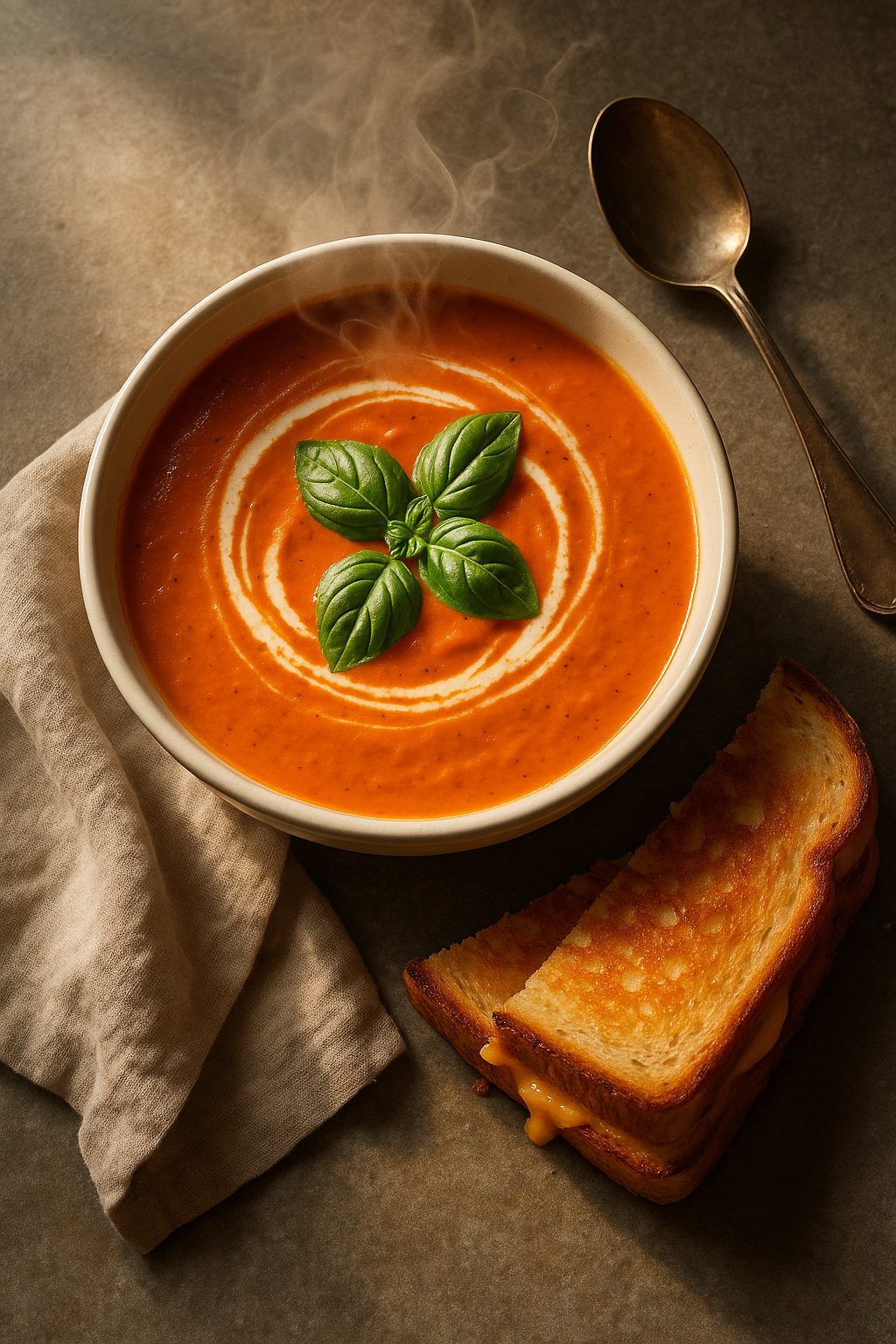
Grilled cheese, obviously. That combination exists for a reason and this soup is thick enough to dip into properly. Beyond that: crusty bread, garlic bread, or croutons; a swirl of cream and a few torn basil leaves on top if you are serving it to people you want to impress; grated parmesan. A simple green salad makes it a full meal without much effort.
Questions
Can I use fresh tomatoes?
Yes, but roast them first — about 3 lbs, halved, at 400°F for 40 minutes. Raw fresh tomatoes simmered briefly produce a watery, thin soup. In winter, canned tomatoes are genuinely better than out-of-season fresh ones.
Why does my tomato soup taste bitter or tinny?
Acidity from the canned tomatoes, or browned garlic. Sugar or a small pinch of baking soda corrects the acidity.
Can I make it without cream?
Yes — it becomes a lighter tomato basil soup. Blending in a boiled potato or a handful of soaked cashews gives creaminess without dairy.
Can I use dried basil?
It will not taste the same. If it is all you have, add a teaspoon during the simmer rather than at the end, and accept that it is a different soup.
Is an immersion blender necessary?
No, a countertop blender works — just blend in batches and vent the lid, because hot liquid in a sealed blender is genuinely dangerous.
How do I make it thicker without cream?
Simmer it down for longer, or blend in a cooked potato or a slice of bread.
Creamy Tomato Basil Soup
Ingredients
Method
- Melt the butter in a large pot over medium heat. Cook the onion for 5 minutes until soft.
- Add the garlic and cook for 30 seconds until fragrant.
- Stir in the crushed tomatoes, vegetable broth, and sugar. Simmer for 15 minutes.
- Blend the soup until smooth using an immersion blender.
- Stir in the heavy cream, basil, salt, and pepper. Warm through and serve.