Creamy Roasted Butternut Squash Soup
There are two ways to make butternut squash soup. You can simmer the squash in broth until it is soft, which takes twenty minutes and produces something pleasant and slightly bland. Or you can roast it first, which takes forty-five minutes and produces something with real depth.
The roasting version is worth the extra time, and most of that time is the oven working while you do something else.
Roasting Is the Entire Recipe
Boiled squash tastes of squash. Roasted squash tastes of squash plus everything that browning creates.
At 425°F the surface of each cube loses its moisture and its natural sugars caramelize. Butternut squash is high in sugar to begin with, so it browns readily, and those caramelized edges are where the sweetness and the nutty, almost toasted flavour come from. Simmering in liquid can never do this — water caps the temperature at boiling point, well below where browning happens.
The onion and garlic roast alongside for the same reason. Whole garlic cloves roasted in their oil go soft, sweet, and mellow, nothing like the sharp bite of raw garlic. Onion wedges caramelize at the edges.
Do not crowd the pan. This is the one thing that ruins the technique. Squash releases a lot of moisture; packed together, that moisture cannot escape, the pan fills with steam, and the cubes essentially boil on a baking sheet. Spread them in a genuine single layer with space between the pieces, and use two pans if you need to.
You want deeply golden, caramelized edges. Pale, soft squash means the pan was crowded or the oven was too cool.
Blending Safely, and Well
A countertop blender gives a silkier result than an immersion blender for a soup this thick, but hot liquid in a sealed blender is genuinely dangerous. Steam expands violently and can blow the lid off along with a litre of scalding purée.
So: fill the jug no more than halfway, remove the centre cap from the lid, and hold a folded towel over the gap. Start on low and work up. Blend in two batches rather than one full jug.
Warming the broth before it goes in helps too — cold broth into hot squash cools everything down and you end up reheating a large volume.
An immersion blender in the pot works and is safer; it just leaves the texture slightly less velvety. If you go that route, blend for longer than feels necessary.
Ingredient Notes
- Butternut squash (3 lbs). That is roughly one large squash. Peeling it is the worst part of this recipe — a sharp Y-peeler and microwaving the whole squash for two minutes first makes it considerably easier. Pre-cubed squash from the supermarket is a completely reasonable shortcut.
- Broth (4 cups, warmed, low sodium). Added gradually rather than all at once, so you control the thickness. Low sodium matters because you are seasoning at the end and roasted squash concentrates.
- Half-and-half (1 cup). Or full-fat coconut milk, which works beautifully here and makes it dairy-free — coconut and squash are a natural pairing. Added off the boil, since dairy can split.
- Nutmeg (1/2 tsp). The classic partner to squash. It should be present but not identifiable.
- Cayenne (1/4 tsp, optional). Worth including. A small amount of heat against all that sweetness keeps the soup from being one-note, and nobody will taste it as spicy.
- Maple syrup (1 tbsp, optional). Taste before adding. A well-roasted squash is often sweet enough on its own; a bland one benefits.
Method
Heat the oven to 425°F. Toss the squash, onion wedges, and whole garlic cloves with the oil, salt, and pepper.
Spread on a large sheet pan in a single layer with space between the pieces.
Roast 40–45 minutes, flipping once, until fork-tender and deeply golden at the edges.
Blend with 2 cups of the warm broth until completely smooth, in two batches.
Pour into a pot and add the remaining broth gradually until it reaches the thickness you want. This is the point to decide — some people want a spoon-coating soup, others something thinner. You do not have to use all four cups.
Add the nutmeg and cayenne and bring to a gentle simmer.
Stir in the half-and-half and the maple syrup if using, warming through without boiling. Taste and adjust the salt — this soup needs more than people expect, because sweetness masks salt.
Troubleshooting
- Bland and flat. Squash was not properly caramelized, or it needs salt. Both are common; try salt first, and roast harder next time.
- Too thin. Too much broth added. Simmer uncovered to reduce.
- Too thick. Add more broth a splash at a time.
- Grainy or fibrous. Not blended long enough. Pass it through a fine sieve if you want it truly silky.
- Curdled after the cream. It boiled. Keep it below a simmer once the dairy is in.
- Too sweet. Skip the maple syrup and add a squeeze of lemon or a splash of cider vinegar to balance it.
Variations
- Apple. Roast two peeled, chopped apples along with the squash. A classic pairing that adds acidity as well as sweetness.
- Curried. Two teaspoons of curry powder with the nutmeg, and coconut milk instead of half-and-half.
- Sage brown butter. Brown a few tablespoons of butter with fresh sage leaves and drizzle over each bowl. The best single upgrade to this soup.
- Thai-inspired. Red curry paste, coconut milk, lime juice, and fresh cilantro.
- Vegan. Vegetable broth and full-fat coconut milk. No other changes needed.
- Extra rich. A tablespoon of cold butter whisked in at the very end.
- Roasted carrot and squash. Add a pound of carrots to the roasting pan.
Toppings
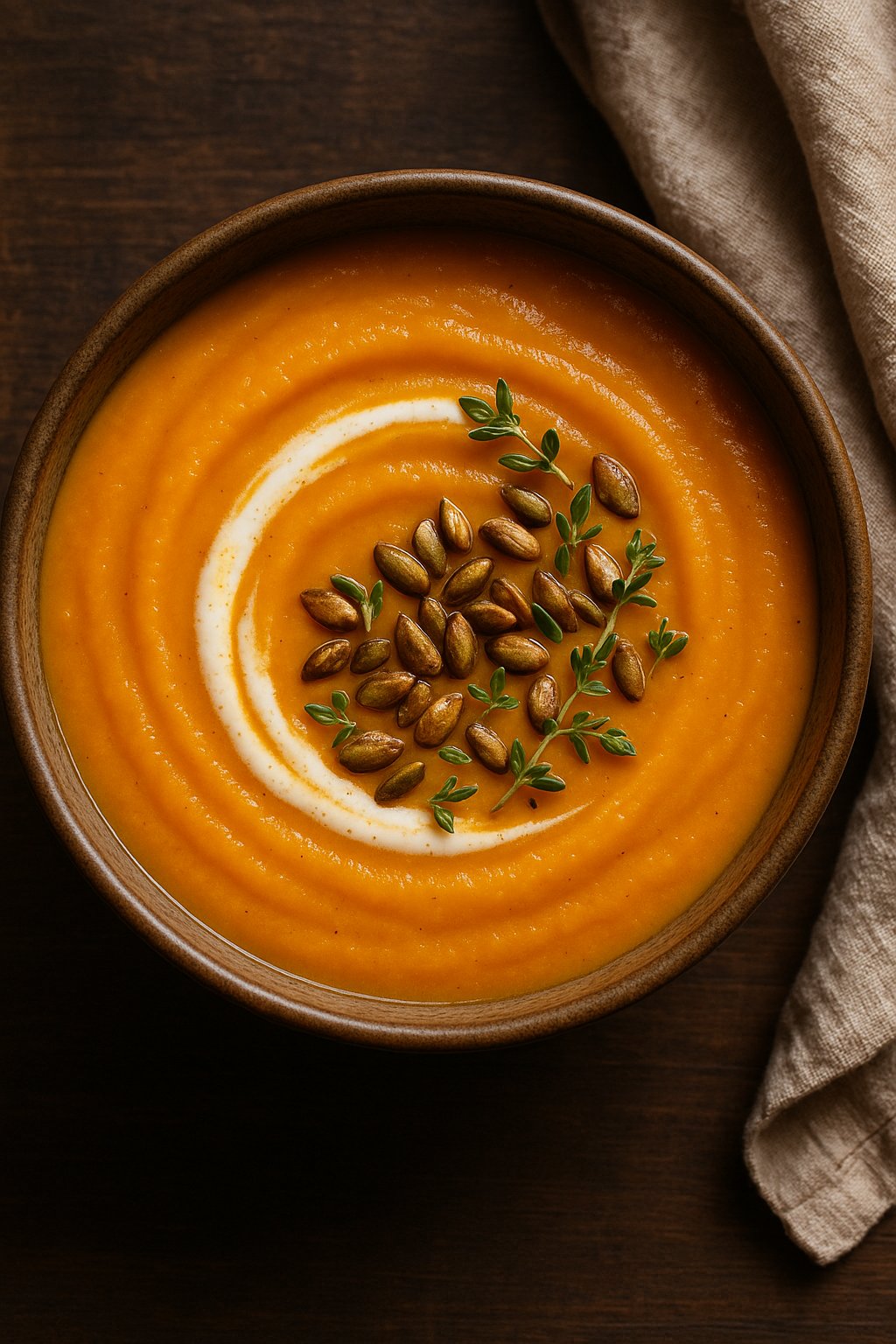
A puréed soup is uniformly smooth, so texture on top matters more than in a chunky soup. Toasted pumpkin seeds, croutons, crisp fried sage, crumbled bacon, or toasted pecans. A swirl of cream or coconut milk for looks. A few drops of good olive oil.
Storage and Freezing
Refrigerate for up to 5 days. The flavour improves overnight. Reheat gently without boiling, since the dairy is already in it.
For freezing, leave the half-and-half out. The squash purée base freezes perfectly for up to 3 months; dairy separates and goes grainy on thawing. Freeze the base, then thaw, reheat, and stir in fresh cream. Coconut milk versions freeze better than dairy ones if you want to freeze it finished.
This is a good candidate for batch cooking. Roasting six pounds of squash takes the same effort as three, and the base freezes in portions.
What to Serve With It
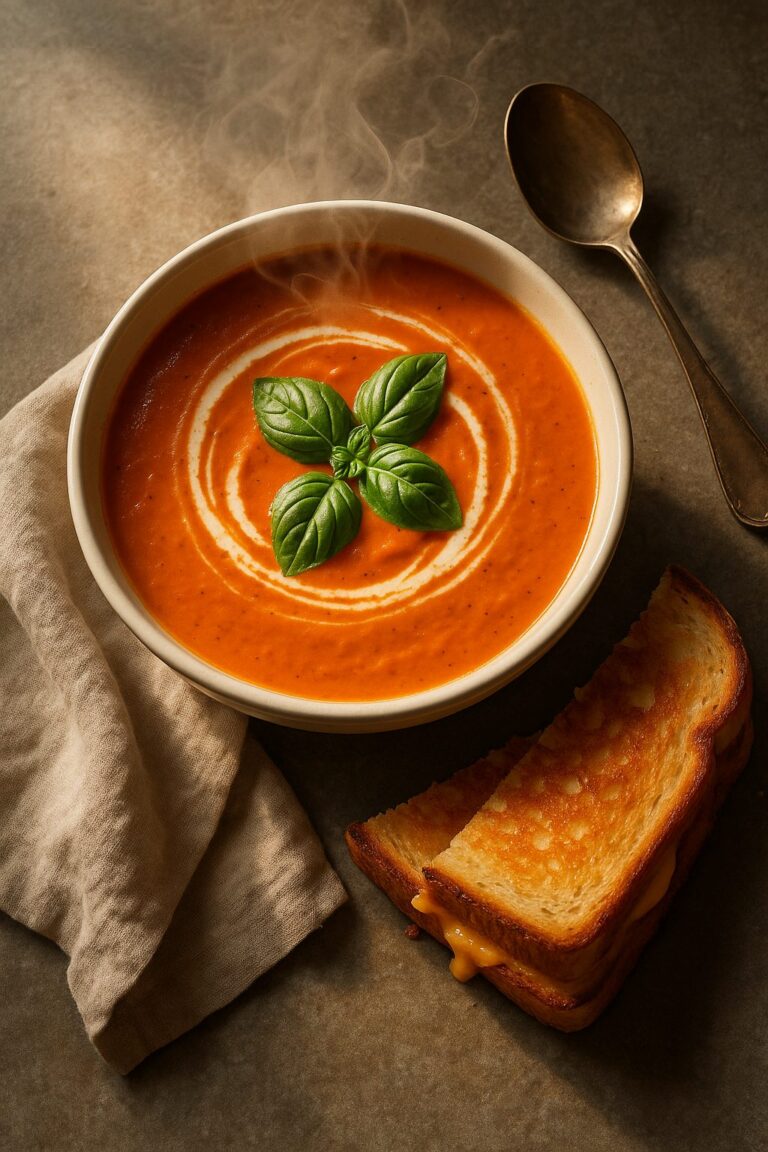
Crusty bread for dipping. A grilled cheese sandwich turns it into a proper dinner. A sharp green salad with vinaigrette cuts through the richness. In small cups it makes an elegant first course for a dinner party, and it can be made entirely in advance, which is most of the appeal.
Questions
Do I have to roast the squash?
You can simmer it instead and the soup will be fine, but roasting is where nearly all the flavour comes from. It is the difference between a good soup and a memorable one.
Can I use frozen or pre-cut squash?
Pre-cut fresh squash is a good shortcut. Frozen squash releases a lot of water and does not caramelize well — thaw and dry it thoroughly, and expect less browning.
How do I peel a butternut squash?
Microwave it whole for 2 minutes to soften the skin, cut off both ends, stand it upright, and work down with a sharp Y-peeler.
Can I make it dairy-free?
Yes — full-fat coconut milk in place of the half-and-half, and vegetable broth. It is arguably better this way.
Why is my soup bland?
Under-roasted squash or under-salting. Sweet foods need more salt than savory ones to taste seasoned.
Can I use an immersion blender?
Yes, and it is safer. Blend for longer than you think to get it smooth.
How do I make it thicker?
Use less broth. You do not need to add all four cups — add gradually and stop where you like it.
Creamy Roasted Butternut Squash Soup
Ingredients
Method
- Heat the oven to 425°F. Toss the squash cubes, onion wedges, and whole garlic cloves with the olive oil, salt, and pepper.
- Spread everything on a large sheet pan in a single layer with space between the pieces — crowd the pan and it steams instead of browning.
- Roast for 40 to 45 minutes, flipping once halfway, until the squash is fork-tender and the edges are deeply golden and caramelized.
- Transfer the roasted vegetables to a blender along with 2 cups of the warm broth. Blend until completely smooth, working in two batches if needed.
- Pour the puree into a large pot and stir in the remaining broth a little at a time until it reaches the thickness you want.
- Add the nutmeg and cayenne and bring to a gentle simmer over medium-low heat.
- Stir in the half-and-half and the maple syrup if using. Warm through without letting it boil, then taste and adjust the salt.
- Serve topped with toasted pumpkin seeds and a swirl of cream.