Classic Beef Lasagna
Lasagna is not difficult. It is just long — about an hour and forty-five minutes from starting to eating, most of it waiting. What it rewards is patience at two specific points, and those two points are where nearly every disappointing lasagna goes wrong.
One is at the beginning and one is at the very end, and both involve doing nothing.
Rest It for 25 Minutes. Actually 25.
This is the hardest instruction in the recipe and the most important.
Straight from the oven, a lasagna is molten. The cheese is liquid, the sauce is thin and mobile, and the layers have no structural integrity whatsoever. Cut into it and it slumps across the plate in a delicious landslide.
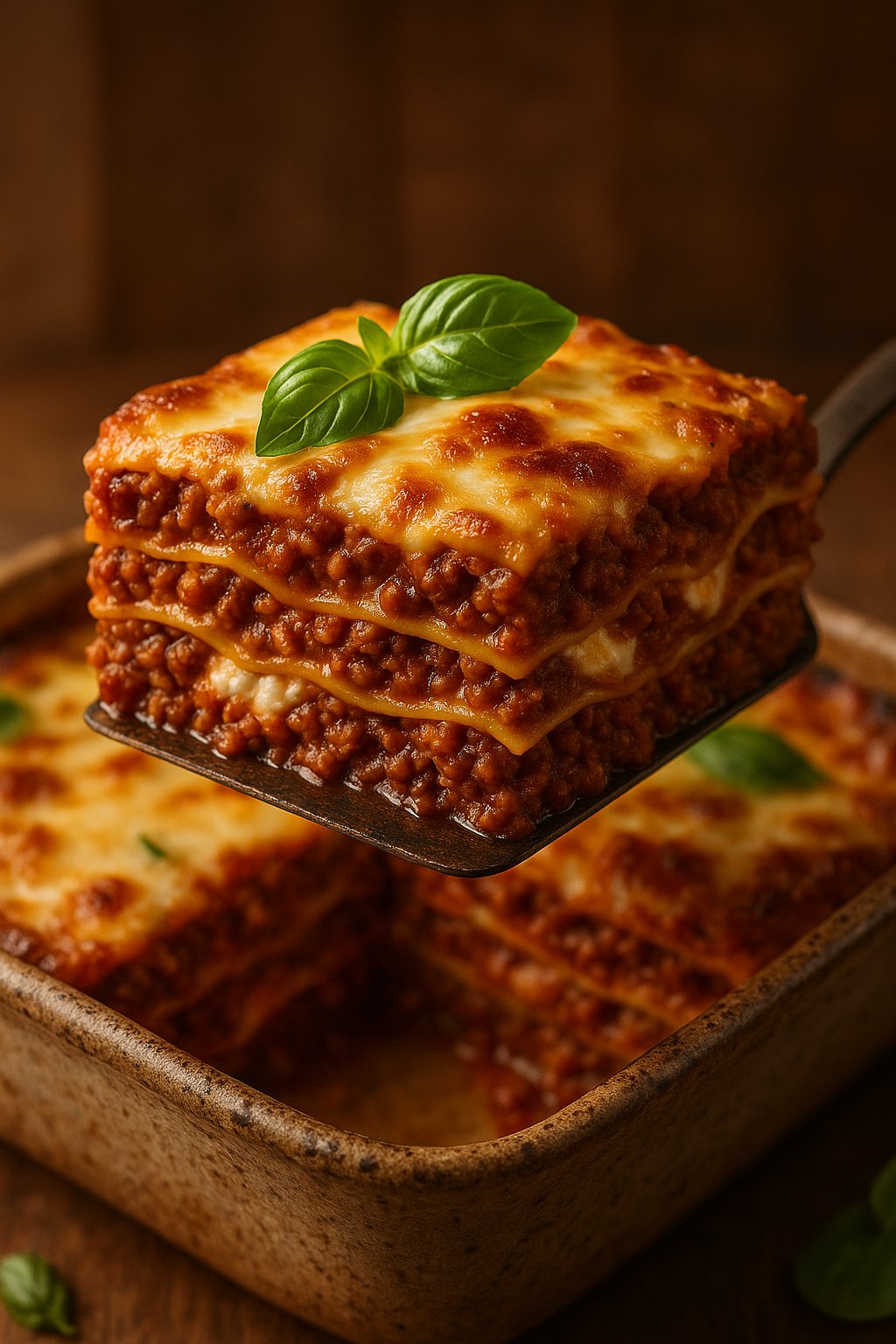
Twenty-five minutes on the counter changes it completely. As it cools, the melted cheese firms, the egg-set ricotta layer solidifies, and the sauce thickens. The whole thing goes from a hot liquid held in place by noodles to something that lifts out in clean rectangular slices with visible layers.
It will still be very hot after twenty-five minutes. This is not about serving temperature; it is about structure.
The Egg in the Ricotta
The second thing, and it takes ten seconds.
Ricotta is a loose, wet cheese. Heated on its own, it releases moisture and slumps, and you get a watery white layer that runs out when you cut a portion. An egg beaten into it sets during baking and binds it into something that holds its shape.
The parmesan mixed in with it does a related job. Ricotta on its own is bland, and a 32 oz tub of it spread through a lasagna will taste of nothing if it is not seasoned. Parmesan brings salt and savouriness; the parsley brings freshness; the added half teaspoon of salt is doing real work.
Taste the ricotta mixture before it goes in. If it tastes flat in the bowl, it will taste flat in the lasagna.
Undercook the Noodles, and Simmer the Sauce Properly
Two smaller points that matter.
The noodles go in at just al dente, because they will absorb liquid from the sauce during more than an hour in the oven. Fully cooked noodles turn soft and slippery. Lay them flat on a sheet pan after draining rather than leaving them in a colander, where they fuse into a single mass that tears when you separate it.
The sauce needs its full 25 minutes uncovered. That reduction is what turns it thick enough to hold the layers together. A thin, watery sauce is the other main cause of a lasagna that will not slice — there is simply too much free liquid in the dish, and it pools at the bottom.
Ingredient Notes
- Ground beef (1 1/2 lbs, 85% lean). Brown it properly — let it sit undisturbed for a few minutes to develop colour rather than stirring constantly. Grey beef contributes bulk but little flavour.
- Tomato paste (3 tbsp). Cooked for a minute until it darkens, which caramelizes its sugars and removes the raw tinny edge. A small step with a large effect.
- Whole milk ricotta (32 oz). Whole milk, not part-skim, which is grainier and wetter. If yours looks watery in the tub, drain it in a sieve for fifteen minutes.
- Mozzarella (4 cups, freshly shredded). Low-moisture block mozzarella, shredded yourself. Fresh mozzarella in water releases far too much liquid. Pre-shredded is coated in anti-caking starch that prevents smooth melting.
- Sugar (1 tsp). In the sauce, to balance the acidity of the canned tomatoes. It will not taste sweet.
- A 9×13 dish. And ideally a deep one — this is a full lasagna with four noodle layers and it fills the dish to the top. Put a sheet pan underneath it in the oven if yours is shallow.
Assembly
The layering order matters, and there is a reason each step is where it is.
Sauce on the bottom first. A cup of meat sauce spread across the base stops the first layer of noodles sticking and drying out.
Then, three times over: 3 noodles, a third of the ricotta, a quarter of the remaining sauce, a cup of mozzarella.
Finish with: the last 3 noodles, the last of the sauce, and the remaining mozzarella. The top layer is noodles under sauce under cheese — never bare noodles, which would dry into something like a cracker.
Cover with foil, tented so it does not touch the cheese. Foil resting on melted mozzarella lifts it off when you remove it. Bake covered 45 minutes, then uncovered 15–20 more for browning.
Troubleshooting
- Slid apart when cut. Not rested long enough, or the sauce was too thin.
- Watery, liquid in the bottom. Part-skim or undrained ricotta, fresh mozzarella, or an under-reduced sauce.
- Ricotta layer ran out. The egg was omitted.
- Noodles mushy. Cooked past al dente before assembly.
- Dry, hard top. Noodles were left exposed without sauce, or it was baked uncovered too long.
- Bland. Unseasoned ricotta. Taste it in the bowl.
- Cheese stuck to the foil. Tent it, or spray the underside.
Variations
- Italian sausage. Replace half the beef with sausage, or use all sausage. It brings its own fennel and seasoning.
- Vegetables. Sautéed mushrooms, zucchini, or spinach folded into the ricotta. Cook them first and squeeze spinach very dry — raw vegetables release water.
- Béchamel version. Replace the ricotta layer with a white sauce for a more northern Italian lasagna. Richer and silkier.
- No-boil noodles. They work; add an extra half cup of liquid to the sauce, as they absorb more.
- Cottage cheese. A common substitution for ricotta. Higher in protein, slightly less smooth.
- Smaller batch. Halve everything into an 8×8 dish and bake 30 minutes covered, 15 uncovered.
Make Ahead, Storage and Freezing
This is one of the best make-ahead dishes there is. Assemble completely, cover, and refrigerate up to 2 days unbaked. Bake from cold and add about 15 minutes.
Baked leftovers keep 4 days refrigerated and reheat well — individual portions covered in the microwave, or the whole dish covered with foil at 350°F for 25 minutes. Lasagna is one of the few things that is arguably better reheated, since the layers have fully set.
It freezes excellently for up to 3 months, unbaked or baked. Unbaked: assemble in a freezer-safe dish, wrap tightly, thaw overnight, and bake as normal plus 15 minutes. Baked: cool completely, cut into portions, and wrap individually — those reheat from frozen in the microwave in about 5 minutes and make a very good lunch.
Cutting a baked lasagna into portions before freezing is the more useful approach for most households.
What to Serve With It
Garlic bread and a green salad with a sharp vinaigrette. That is the whole answer. The lasagna is rich and heavy and the salad is doing the balancing work; something creamy on the side would be redundant. Roasted broccoli or sautéed greens also work.
Questions
Why does my lasagna fall apart when I cut it?
It was not rested long enough, or the sauce was too thin. Twenty-five minutes on the counter is the fix.
Do I need the egg in the ricotta?
It is what sets the cheese layer so the lasagna slices cleanly. Without it the ricotta stays loose and runs.
Can I use no-boil noodles?
Yes. Add an extra half cup of liquid to the sauce, since they absorb more during baking.
Can I assemble it the day before?
Yes, up to 2 days ahead refrigerated. Add 15 minutes to the bake time from cold.
Why is my lasagna watery?
Usually part-skim ricotta, fresh mozzarella, or a sauce that was not reduced enough. All three add free liquid.
Can I use cottage cheese instead of ricotta?
Yes, and many people prefer it. Blend it briefly for a smoother texture.
How many does it serve?
Twelve, generously. It is a large dish and it freezes well, so leftovers are not a problem.
Classic Beef Lasagna
Ingredients
Method
- Heat the olive oil in a large pot over medium-high. Brown the ground beef, breaking it up, about 8 minutes. Drain off the excess fat.
- Add the onion and cook 5 minutes, then the garlic for 30 seconds. Stir in the tomato paste and cook 1 minute, until it darkens.
- Add the crushed tomatoes, tomato sauce, oregano, basil, salt, red pepper flakes, and sugar. Simmer uncovered for 25 minutes, stirring occasionally, until thick.
- Meanwhile, cook the lasagna noodles until just al dente, drain, and lay them flat on a sheet pan so they do not stick together.
- Stir the ricotta, beaten egg, Parmesan, parsley, and salt together in a bowl. The egg is what sets the cheese layer so the lasagna slices cleanly.
- Heat the oven to 375°F. Spread 1 cup of meat sauce across the bottom of a 9x13-inch baking dish.
- Layer: 3 noodles, one third of the ricotta mixture, one quarter of the remaining sauce, and 1 cup of mozzarella. Repeat twice more, then finish with a final layer of noodles, the last of the sauce, and the remaining mozzarella.
- Cover with foil (tent it so it does not touch the cheese) and bake for 45 minutes.
- Remove the foil and bake 15 to 20 minutes more, until the top is bubbling and browned in spots.
- Rest the lasagna on the counter for 25 minutes before cutting. This is what lets the layers set into clean slices.