Slow Cooker Pulled Pork
Ten servings of pulled pork for the price of one cheap cut and about fifteen minutes of attention. The slow cooker does the other eight hours. It is the most efficient cooking-to-effort ratio I know of, and it is the thing to make when you are feeding a lot of people and do not want to be in the kitchen while they arrive.
Three details separate very good pulled pork from the merely acceptable version, and none of them takes long.
Use Pork Shoulder, and Do Not Trim It
Pork shoulder — also sold as Boston butt, which confusingly is not the back end of the animal — is the correct cut and there is no real substitute.
It is a hard-working muscle laced with connective tissue and intramuscular fat. Over eight hours at low temperature, the collagen in that connective tissue converts to gelatin, which is what makes pulled pork silky and moist rather than stringy. The fat renders and bastes the meat from within.
Pork loin or tenderloin will not work. They are lean, have almost no collagen, and after eight hours in a slow cooker they turn into dry, chalky threads. It is the most common mistake with this dish and it is unfixable once you are eight hours in.
Do not trim the fat cap off, either. Leave it on during cooking — it renders down and keeps the meat moist — and remove any large unrendered pieces when you shred.
Sear It First
Three minutes a side in a hot skillet before the pork ever goes in the slow cooker. It adds fifteen minutes to a nine-hour recipe and it is the difference between pulled pork that tastes deep and roasted and pulled pork that tastes boiled.
A slow cooker is a moist environment that never gets above the boiling point of water. Browning reactions need dry heat well above that, so nothing that goes into a slow cooker raw will ever develop those flavours on its own. The sear is your only chance.
Related: pour the broth and vinegar around the pork, not over the top. Liquid poured over washes the rub and the seared crust straight off. The pork will release plenty of its own juices anyway — a cup of broth looks like far too little at the start and there will be several cups of liquid by the end.
Keep the Lid On
Every time you lift the lid you release the accumulated steam and drop the internal temperature substantially, and a slow cooker takes twenty to thirty minutes to recover. Checking three times can add over an hour to the cook.
There is nothing to check anyway. Eight hours on LOW, then test whether it shreds under a fork.
And it must be LOW. HIGH for four hours will get the pork to a safe temperature, but collagen conversion is a slow process that depends on time as much as heat. Pork rushed on HIGH comes out tough and is the second most common complaint about this dish.
Ingredient Notes
- Pork shoulder (4 lbs, boneless). Bone-in works too and arguably has more flavour; add an hour to the cooking time and expect a slightly smaller yield.
- Apple cider vinegar (2 tbsp). Cuts through a very rich, fatty cut. Without acid, pulled pork tastes heavy and cloying. This is also why vinegar-based sauces are traditional in much of the American South.
- Brown sugar and smoked paprika in the rub. The sugar helps the seared crust and balances the salt; the smoked paprika is doing the work that actual smoke would in a barbecue pit.
- Salt (1 tbsp). Four pounds of meat needs it. Under-salted pulled pork is bland no matter how much sauce goes on afterwards.
- BBQ sauce (1 1/2 cups). Added at the very end, after shredding. Cooking sauce for eight hours dulls it and the sugar can turn slightly bitter.
- The reserved cooking juices. Do not throw these away. A cup of them stirred back into the shredded meat is what keeps it moist — more important than the sauce.
Method
Mix the rub and press it all over the dried pork. Pressing rather than sprinkling helps it adhere.
Sear on all sides in a hot skillet, about 3 minutes per side, until deeply browned.
Scatter the sliced onion in the slow cooker and set the pork on top. The onion acts as a rack, keeping the meat out of the liquid, and it melts into the juices.
Pour the broth and vinegar around the sides.
Cover and cook on LOW for 8 hours, lid closed.
Shred with two forks in a large bowl, discarding large pieces of fat. If it resists shredding, it is not done — give it another hour.
Skim the fat off the cooking liquid. A wide spoon works; letting it settle for ten minutes makes it easier.
Return the pork with 1 cup of the juices and the BBQ sauce, toss, and keep warm.
Troubleshooting
- Dry or stringy. Wrong cut (loin instead of shoulder), or the cooking juices were discarded. Stir in more of the reserved liquid.
- Tough, will not shred. Undercooked. Counterintuitively, the answer is more time, not less.
- Greasy. The fat was not skimmed from the juices before adding them back.
- Bland. Under-seasoned rub, or no vinegar. Four pounds of pork needs a full tablespoon of salt.
- Watery. Too much liquid added at the start. One cup is enough; the pork provides the rest.
- Sauce tastes flat. It was cooked for eight hours instead of added at the end.
Crisping It Up
Slow-cooked pork is soft throughout, and some people miss the crunchy burnt ends of proper barbecue. If you want them, spread the sauced pork on a sheet pan and broil for three to five minutes until the edges char. It takes five minutes and adds a texture the slow cooker cannot.
Variations
- Carnitas style. Skip the BBQ sauce; use orange juice and lime in place of some of the broth, and season with cumin and oregano. Crisp under the broiler.
- Carolina style. Use a thin vinegar-based sauce instead of a thick tomato one — cider vinegar, red pepper flakes, a little sugar.
- Root beer or cola. Replace the broth with a cup of either. The sugar adds sweetness and helps tenderize.
- Spicy. Cayenne in the rub, or chipotles in adobo added to the pot.
- Pressure cooker. Sear using the sauté function, then 60 minutes at high pressure with a 15-minute natural release.
- Oven. Covered in a Dutch oven at 300°F for 5–6 hours.
Storage and Freezing
Refrigerate for up to 4 days. Store it in some of the cooking juices rather than dry — pulled pork dries out in the fridge and the liquid protects it.
It freezes extremely well for up to 3 months, which makes the large batch worth making even for a small household. Freeze it in portions with a few spoonfuls of the juices in each container. Thaw overnight and reheat gently in a covered pan with a splash more liquid.
Reheat on the stove or in a low oven rather than the microwave where possible — the microwave tends to dry the edges while the middle is still cold.
How to Serve It
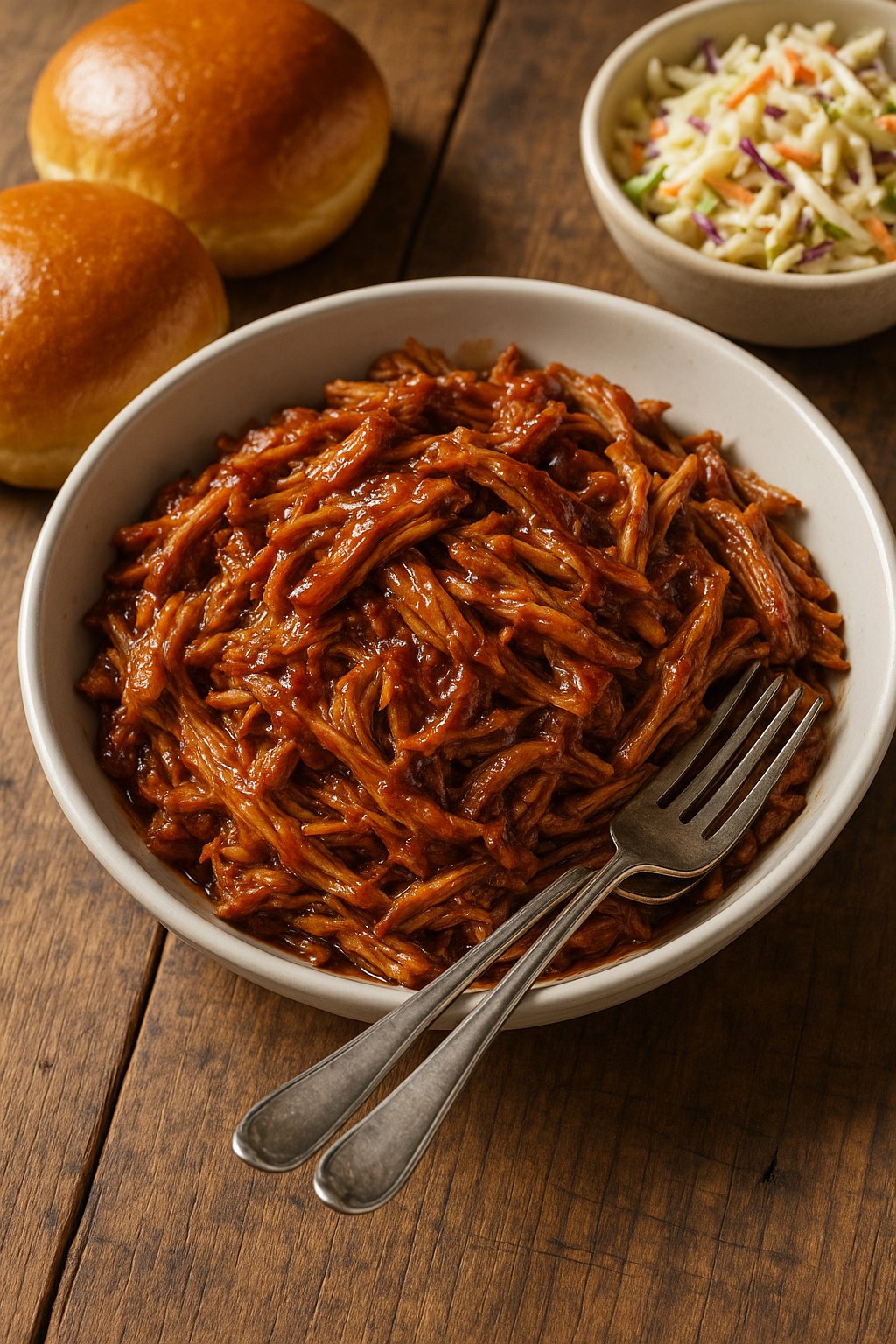
On soft buns with coleslaw piled directly on top rather than beside — the cold, sharp slaw against the hot rich pork is the entire point of the sandwich. Beyond that: tacos, nachos, loaded baked potatoes, quesadillas, on top of mac and cheese, or over rice. Ten servings goes further than it sounds because it works in so many formats.
Standard sides: baked beans, cornbread, macaroni salad, pickles.
Questions
What cut of pork do I need?
Pork shoulder, also labelled Boston butt. Do not use loin or tenderloin — they have no collagen and turn dry.
Can I cook it on HIGH to save time?
You can, for about 5 hours, but the texture is noticeably tougher. Collagen needs time as well as heat.
Do I have to sear it first?
Not for safety, but it is where most of the depth of flavour comes from. A slow cooker cannot brown anything on its own.
Why is my pulled pork dry?
Usually the wrong cut, or the cooking juices were thrown away. Always stir a cup of the skimmed liquid back in.
Can I make it the day before?
Yes, and it reheats very well. Store it in its juices and add the BBQ sauce when reheating.
How much pork per person?
About 1/3 lb of raw weight per person for sandwiches. Four pounds raw yields roughly 2 1/2 lbs cooked, serving 10.
Can I double it?
Only if your slow cooker is large enough for the meat to sit in a single layer. Stacked pieces cook unevenly. Do not increase the liquid.
Slow Cooker Pulled Pork
Ingredients
Method
- Mix the brown sugar, smoked paprika, garlic powder, onion powder, salt, and pepper. Pat the pork dry and rub the mixture all over, pressing it into the surface.
- Heat the oil in a large skillet over medium-high heat. Sear the pork on all sides until deeply browned, about 3 minutes per side. Don't skip this — it's where the flavor starts.
- Scatter the sliced onion in the slow cooker and set the seared pork on top. Pour the chicken broth and vinegar around the sides, not over the top, so the crust stays intact.
- Cover and cook on LOW for 8 hours, until the pork shreds easily when pressed with a fork. Avoid lifting the lid while it cooks.
- Transfer the pork to a large bowl and shred with two forks, discarding any large pieces of fat. Skim the fat from the cooking liquid and reserve the juices.
- Return the shredded pork to the slow cooker with 1 cup of the reserved juices and the BBQ sauce. Toss to coat and keep warm until serving.