Hearty Beef and Vegetable Soup
There is a version of beef vegetable soup that tastes like beef and vegetables sitting politely in the same bowl of broth, and there is a version where everything has melted into one deep, savory thing. The gap between them is about ten minutes of work at the very beginning.
Those ten minutes are browning the beef properly. Almost every other step in this recipe is forgiving. That one is not, and it is the one people rush.
Why Browning the Beef Is Non-Negotiable
When beef hits a hot, dry pan, the proteins and sugars on its surface undergo the Maillard reaction — the same set of chemical changes that make bread crust taste different from bread. It creates hundreds of new aromatic compounds that simply do not exist in the raw meat.
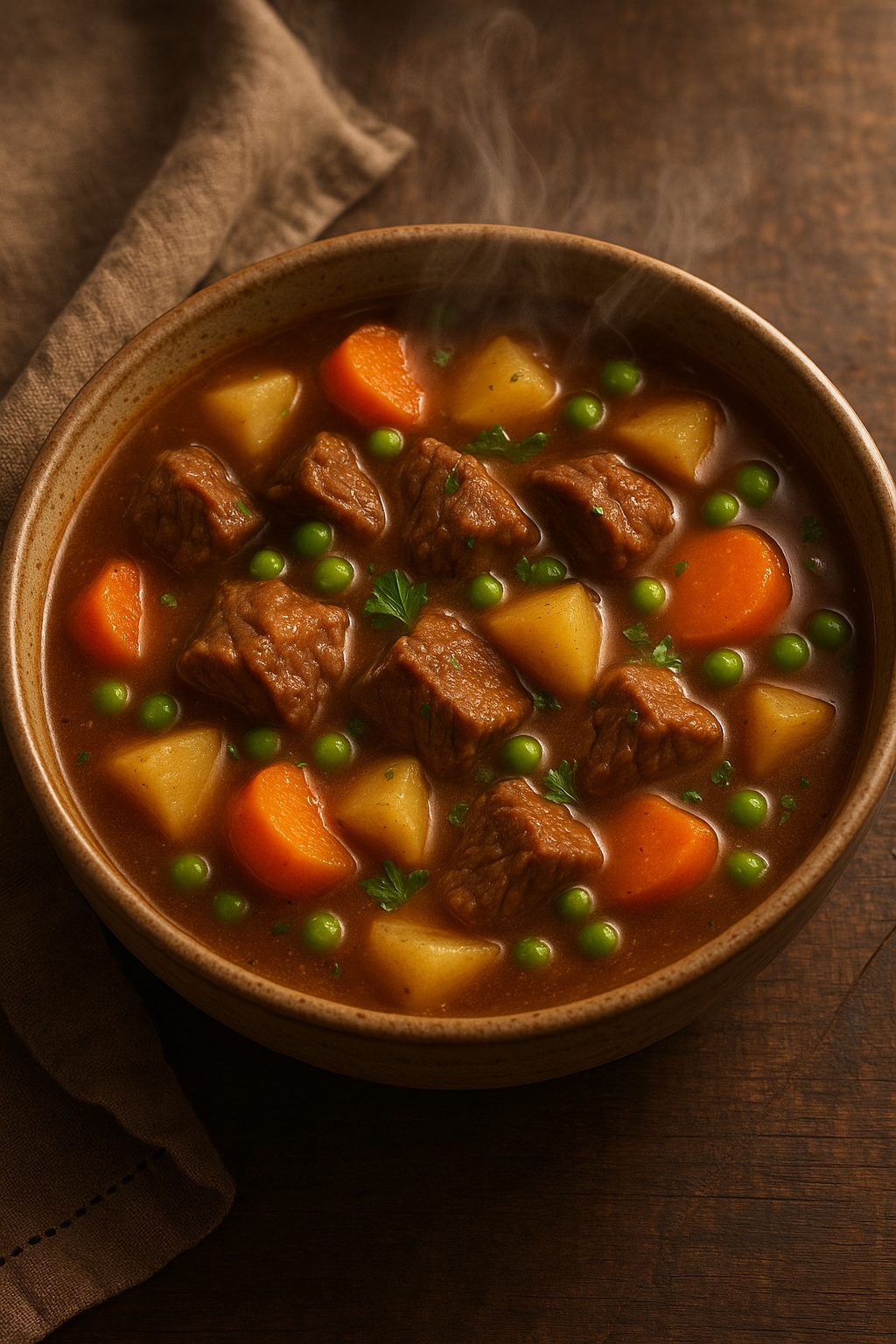
Those compounds end up stuck to the bottom of the pot as a dark layer called fond, and when the broth goes in, the fond dissolves and spreads through the entire soup. That is where the deep, roasted, almost meaty-sweet background flavour comes from. Skip the browning and add raw beef straight to broth and you get a perfectly edible soup that tastes thin and one-dimensional, and no amount of simmering later will put back what you did not build.
To get it right: pat the beef dry, get the oil properly hot, and work in two batches. Wet meat steams instead of browning, and a crowded pot drops the temperature so far that the beef releases its juices and boils in them. You want a hard sizzle and a dark crust on at least two sides of each cube. Grey beef means the pan was too cool or too full.
Ingredient Notes
- Beef stew meat (1 lb, cubed). This is usually chuck, which is exactly what you want. Chuck is full of connective tissue that breaks down into gelatin over a long simmer, giving both tender meat and body in the broth. Do not substitute a lean cut like sirloin — it has nothing to break down and turns dry and stringy. Cut into even 1-inch cubes.
- Beef broth (6 cups). The backbone. A good broth makes a noticeable difference here. If yours is low-sodium, you will need more salt at the end.
- Canned diced tomatoes (14 oz). Include the juice. The acidity balances the richness of the beef, and it also helps tenderize the meat over the simmer.
- Potatoes (2, cubed). Russets break down slightly and thicken the broth; Yukon golds hold their shape better. Either is fine, and the choice is really about whether you want a thicker soup or more distinct chunks.
- Carrots, celery, onion. The standard aromatic base, softened in the pot after the beef comes out so they pick up the fond.
- Frozen peas (1 cup). In at the very end, for five minutes only. Peas added at the start turn grey and mealy. Frozen is genuinely better than fresh here.
- Dried thyme (1 tsp). Dried holds up better than fresh over a long simmer.
Method
Season and brown the beef in two batches over medium-high heat, 2–3 minutes a side, until well crusted. Move it to a plate and keep any juices that collect.
Cook the onion, carrots, and celery in the same pot for 5 minutes, scraping the bottom as they release moisture — that moisture is what lifts the fond off the pan. Garlic goes in for the last 30 seconds.
Return the beef and add the broth, tomatoes, potatoes, and thyme. Bring it to a boil, then immediately drop it to a simmer.
Simmer 30–35 minutes. Keep it at a lazy bubble, not a rolling boil. A hard boil makes beef tough — the muscle fibres contract and squeeze out moisture faster than the collagen can break down. Low and slow is what turns chuck tender.
Add the peas for the final 5 minutes.
Taste and season properly at the end. Soups need more salt than people expect, and this one has a lot of liquid and starch absorbing it. Add in small amounts, tasting each time. If it still tastes flat with enough salt in it, a splash of red wine vinegar or a squeeze of lemon will usually be what it wants.
If You Have More Time
Thirty-five minutes gives you a good soup with tender-enough beef. If you have longer, this improves considerably with a longer simmer — ninety minutes at a very low heat, adding the potatoes for the last thirty so they do not disintegrate, gives you beef that falls apart against a spoon and a broth with real body from the rendered collagen.
It also gets better overnight. The starch from the potatoes thickens the broth and the flavours settle into each other. If you can make it a day ahead, do.
Troubleshooting
- Beef is tough. Either it needed longer, or it was boiled rather than simmered, or a lean cut was used instead of chuck. Tough beef in a soup almost always means undercooked, not overcooked — keep simmering.
- Broth tastes thin. The beef was not browned, or it needs salt and acid. Both are fixable at the table; the browning is not.
- Potatoes fell apart. Russets in a long simmer. Use Yukon golds or add them later.
- Greasy surface. Skim the fat off with a spoon, or refrigerate overnight and lift the solidified layer off — much easier.
- Vegetables are mushy. Cut them larger next time; small dice cannot survive 35 minutes.
Variations
- Add barley. 1/2 cup of pearl barley with the broth turns this into beef and barley soup. Add an extra cup of liquid, since barley drinks a lot.
- Green beans or corn. Both work, added in the last 10 minutes.
- Deeper flavour. Deglaze the pot with 1/2 cup of red wine after the vegetables and let it reduce by half before the broth goes in. Also worth adding a tablespoon of tomato paste with the garlic and letting it darken for a minute.
- Slow cooker. Brown the beef and vegetables on the stove first — do not skip that — then everything except the peas on low for 7 hours. Peas in the last 15 minutes.
- Pressure cooker. Brown using the sauté function, then 20 minutes at high pressure with a natural release. Add the peas after.
- Ground beef version. Brown a pound of ground beef instead and cut the simmer to 20 minutes. Faster, less deep, still good on a weeknight.
Storage and Freezing
Refrigerate for up to 4 days. This is one of the soups that genuinely improves on day two, so leftovers are a feature rather than a consolation.
It freezes very well for up to 3 months, with one caveat: potatoes come out of the freezer slightly grainy and softened. It is a minor issue and most people do not mind. If you are freezing deliberately, you can leave the potatoes out and add fresh ones when reheating.
Cool it before it goes in the fridge or freezer, and freeze in portion-sized containers so you are not thawing the whole batch. Reheat gently on the stove, adding a splash of broth if it has thickened.
What to Serve With It
Crusty bread is the obvious and correct answer — something with a real crust for dragging through the broth. Cornbread works well too. A sharp green salad on the side balances the richness. It is a complete meal on its own, so nothing else is really required beyond something to mop the bowl with.
Questions
Can I use a different cut of beef?
Chuck is best. Brisket and short rib also work well. Avoid lean cuts like sirloin or round, which turn dry and stringy in a soup.
Do I really need to brown the meat?
Yes. It is the single biggest contributor to the depth of flavour and it cannot be added later.
Can I make this vegetarian?
Not really as written — the beef and its browning are the entire foundation. A good vegetable soup is a different recipe rather than this one with the meat removed.
Why is my beef still chewy after 35 minutes?
It needs more time. Collagen breakdown is slow. Keep it at a gentle simmer and check again in 20 minutes.
Can I add pasta?
Yes, small shapes like ditalini, cooked separately and added to each bowl. Cooked in the pot they absorb the broth and go bloated by the next day.
How do I thicken it?
Mash a few of the potato cubes against the side of the pot. That thickens it naturally without flour.
Hearty Beef and Vegetable Soup
Ingredients
Method
- Season the beef with salt and pepper. Heat the olive oil in a large pot over medium-high heat and brown the beef on all sides. Transfer to a plate.
- Add the onion, carrots, and celery and cook for 5 minutes. Stir in the garlic for 30 seconds.
- Return the beef and add the beef broth, diced tomatoes, potatoes, and thyme. Bring to a boil.
- Reduce the heat and simmer for 30-35 minutes, until the beef and potatoes are tender.
- Stir in the frozen peas and cook 5 more minutes. Season to taste and serve.