Classic Creamy Coleslaw
Good coleslaw is a supporting act that occasionally steals the show, and bad coleslaw is a bowl of wet cabbage in sweet mayonnaise. The gap between them is not large and it is almost entirely in the dressing ratio and the resting time.
Ten minutes of work, an hour in the fridge, and it feeds eight people alongside anything off a grill.
The Hour in the Fridge Is Doing Real Work
The instruction to chill for at least an hour is not about serving it cold. It is a step in making it.
Freshly shredded cabbage is tough and slightly harsh, and the dressing sits on the outside of the shreds without penetrating. Salt in the dressing — here from the celery salt — draws moisture out of the cabbage through osmosis. As that happens, the cabbage softens from raw and squeaky to tender-crisp, and the dressing thins slightly and works its way into every shred.
Coleslaw served immediately tastes of dressing sitting on cabbage. Coleslaw rested for an hour tastes like one thing. Two hours is better; three or four is the sweet spot.
The same process is why coleslaw eventually goes watery. It does not stop after an hour — the cabbage keeps releasing liquid, and by day two there will be a pool at the bottom of the bowl. That is normal and not a failure; drain it off or stir it back in.
If you want to control that more precisely, you can salt the shredded cabbage separately first: toss it with a teaspoon of salt, leave it in a colander for 30 minutes, then squeeze it dry and dress it. That gives a slaw that stays crisp for days without weeping. It is an extra step and worth it if you are making it well ahead or transporting it.
Why This Dressing Is Not Just Mayonnaise
Half a cup of mayonnaise for eight cups of vegetables is less than most recipes use, and the other four ingredients are why it still works.
Apple cider vinegar is the most important. Mayonnaise alone is rich and flat; the vinegar cuts through it and makes the whole thing taste bright rather than heavy. It is also the difference between a slaw that complements barbecue and one that competes with it.
Dijon mustard does two jobs — flavour, and emulsification. Mustard helps bind the vinegar and the mayonnaise so the dressing stays smooth rather than splitting into oily and watery parts.
Sugar, one tablespoon, balances the vinegar. Deli-style coleslaw is often far sweeter; this is deliberately restrained so the cabbage still tastes like cabbage. Adjust to your own preference — if you grew up on the sweet kind, use two.
Celery salt is the ingredient that makes coleslaw taste like coleslaw. If you have ever made a slaw that tasted almost right but slightly anonymous, this is probably what was missing. It is worth buying a jar for.
Ingredient Notes
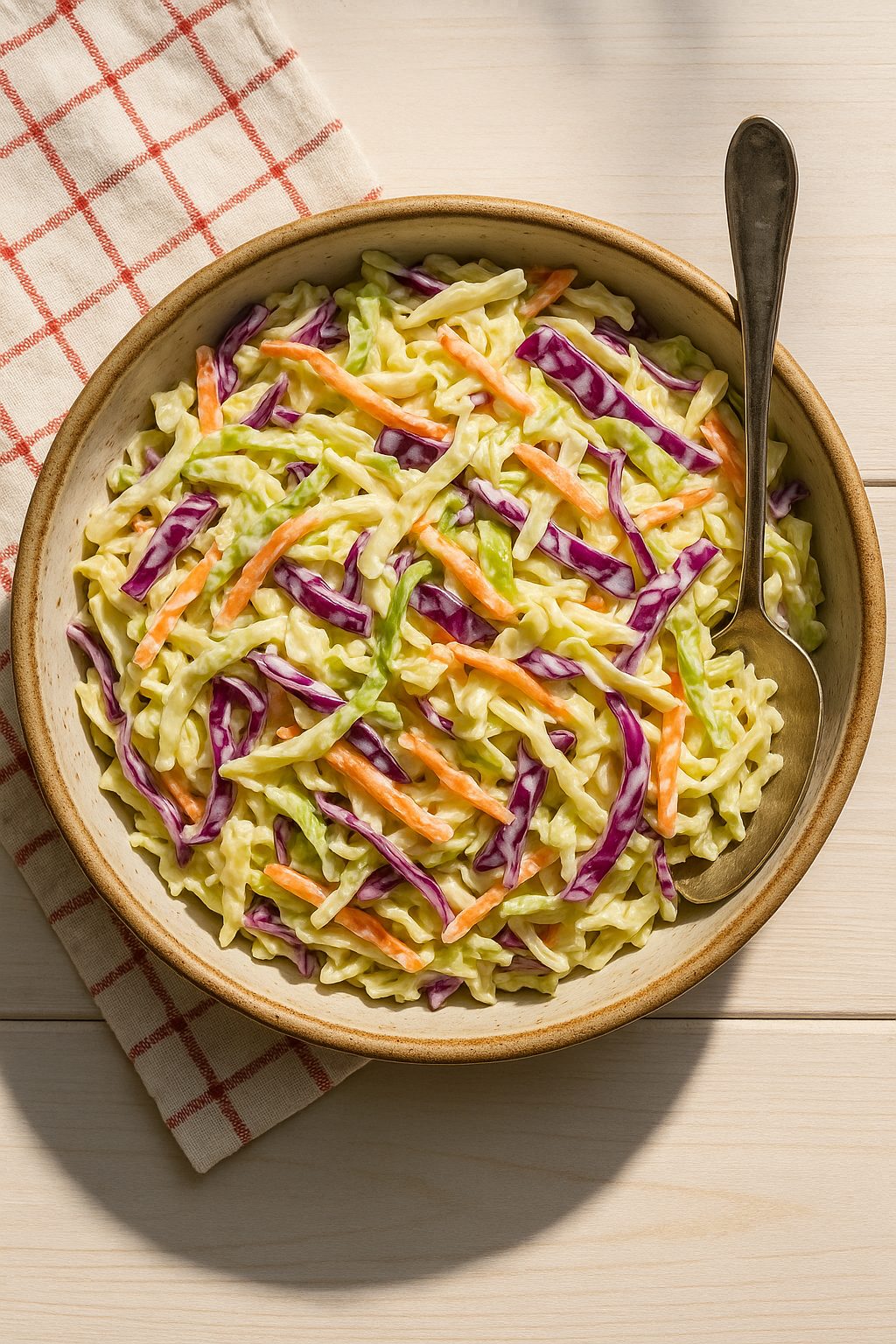
- Green cabbage (6 cups) and purple cabbage (2 cups). Shred finely. The purple is largely for appearance, and it will bleed slightly into the dressing over time, tinting the whole thing pink. That is cosmetic. If you want to avoid it, use all green.
- Carrots (1 cup, shredded). Sweetness and colour. Shred them yourself if you can; pre-shredded carrots are often dry and woody.
- Mayonnaise (1/2 cup). Use a brand you actually like the taste of, since it is a raw dressing and there is nowhere for a poor one to hide.
- Shredding. A sharp knife, a mandoline, or a food processor slicing disc. Thin is the goal — roughly 1/8 inch. Bagged coleslaw mix works and saves ten minutes; you will need about 14 oz.
Method
Whisk the dressing in the bottom of a large bowl first: mayonnaise, vinegar, mustard, sugar, celery salt, and pepper. Whisk until completely smooth before any vegetables go in. Trying to combine a thick dressing with eight cups of cabbage already in the bowl does not work — you get clumps.
Add the cabbages and carrots and toss until evenly coated. Tongs or clean hands. Take your time; every shred should be dressed.
Cover and refrigerate at least an hour.
Toss again and taste before serving. It will almost always want a little more salt or a splash more vinegar after resting, because the cabbage has absorbed some of both.
Troubleshooting
- Watery. Normal after several hours. Drain the liquid off, or salt and drain the cabbage before dressing next time.
- Bland. Under-salted, or no celery salt. Cabbage absorbs a lot of seasoning.
- Too sweet. Cut the sugar and add more vinegar.
- Too tangy. A little more mayonnaise or sugar.
- Cabbage still tough and squeaky. It has not rested long enough, or it was shredded too thickly.
- Dressing split or greasy. Usually from skipping the mustard, which holds it together.
Variations
- Vinegar slaw. Skip the mayonnaise entirely and use 1/3 cup oil, 1/4 cup cider vinegar, and 2 tablespoons sugar. Lighter, keeps far longer, and better in hot weather.
- With buttermilk. Replace 2 tablespoons of the mayonnaise with buttermilk for a thinner, tangier dressing.
- Add apple. A julienned tart apple adds sweetness and crunch. Toss it in lemon juice first so it does not brown.
- Spicy. A tablespoon of sriracha or a diced jalapeño.
- Herby. A handful of chopped dill, parsley, or chives.
- Extra crunch. Sunflower seeds or toasted sliced almonds, added at serving time.
- Broccoli slaw. Substitute a bag of shredded broccoli stems for some of the cabbage. It holds up even better and does not weep.
Storage and Making It Ahead
Coleslaw keeps for 3 days refrigerated. It is at its best between one hour and one day after making — long enough to have softened and absorbed the dressing, not so long that it has gone limp.
If you are making it for an event, you have two good options. Either make it 2–4 hours ahead, which is close to ideal timing, or prepare the shredded vegetables and the dressing separately up to 2 days in advance and combine them an hour before serving. The second is what I would do for anything important.
Do not freeze it. Mayonnaise separates and cabbage turns to limp strings on thawing. There is no version of frozen coleslaw that is worth eating.
For transporting to a picnic or barbecue, keep it in a cooler. This is a mayonnaise-based salad and it should not sit out in the sun for hours.
What to Serve It With
Pulled pork, barbecue chicken, ribs, brisket — anything smoky and rich, where the acidity does the balancing. Piled directly onto a pulled pork sandwich rather than served beside it is arguably the best use of it. Fried chicken, fish tacos, burgers, hot dogs. It is one of the standard American picnic sides and it earns its place by being the sharp, cold, crunchy thing on a plate of hot heavy food.
Frequently Asked Questions
How far in advance can I make coleslaw?
Up to a day for the best texture, three days at the outside. Two to four hours ahead is ideal.
Why did mine get watery?
Cabbage releases water when salted, which is unavoidable over time. Drain it, or pre-salt and squeeze the cabbage before dressing.
Can I use bagged coleslaw mix?
Yes. A 14 oz bag replaces the cabbage and carrots. It is a genuinely reasonable shortcut.
What is celery salt and can I skip it?
It is ground celery seed mixed with salt, and it is the classic coleslaw flavour. You can substitute 1/4 teaspoon of celery seed plus 1/4 teaspoon of salt. Skipping it entirely leaves the slaw tasting incomplete.
Can I make it dairy-free or vegan?
It already is dairy-free. For vegan, use a plant-based mayonnaise — they work well in this application.
How do I make it less sweet?
Halve the sugar or leave it out and add a little extra vinegar. Taste after resting, since the flavours change.
Can I double it?
Easily. Use a very large bowl, and remember it will produce twice as much liquid over time.
Classic Creamy Coleslaw
Ingredients
Method
- In a large bowl, whisk together the mayonnaise, apple cider vinegar, mustard, sugar, celery salt, and pepper.
- Add the green cabbage, purple cabbage, and carrots.
- Toss until everything is evenly coated in the dressing.
- Cover and refrigerate for at least 1 hour before serving.