Easy One-Hour Cinnamon Rolls
Homemade cinnamon rolls usually mean a morning that starts the night before, or three hours of rising. These take seventy-five minutes start to finish, and the reason is not a shortcut in the dough — it is a trick with the oven that cuts the rising time roughly in half.
The dough is a straightforward enriched yeast dough. Nothing is skipped. It just rises faster because you build it a proofing box.
Turn Your Oven Into a Proofing Box
Yeast is temperature-sensitive. In a cool kitchen — anything below about 70°F — it works slowly, and a first rise can take well over an hour. At around 80–85°F with high humidity, the same dough nearly doubles in twenty-five minutes.
Heating the oven to its lowest setting for two minutes and then turning it off creates exactly that. The residual warmth holds a gentle temperature, and a pan of boiling water on the bottom rack fills the space with steam.
The humidity matters as much as the heat. Dry warm air forms a skin on the surface of the dough, which restricts how far it can expand. Steam keeps the surface soft and pliable so it rises freely.
Two warnings. The oven must be genuinely off — two minutes on the lowest setting and then off, no longer. An oven still heating will kill the yeast, which dies above about 120°F. And take both the rolls and the water pan out before you preheat for baking.
Cut Them With Dental Floss
This sounds like a gimmick and it is the best tip in the recipe.
A knife, however sharp, presses down on a soft spiral of dough. That pressure squashes the roll into an oval and compresses the layers, so the finished bun is dense on one side and the spiral is smeared rather than defined.
A length of unflavoured dental floss slid underneath the log, crossed over the top, and pulled through in opposite directions cuts by tension rather than pressure. The roll stays perfectly round and the layers stay distinct. It takes seconds and the difference in the finished rolls is obvious.
Unflavoured is worth specifying. Mint dental floss will make mint cinnamon rolls. Plain thread works too.
Very Soft Butter for the Filling
The filling butter needs to be genuinely soft — spreadable like mayonnaise, but not melted.
Cold butter tears the rolled-out dough as you try to spread it. Melted butter runs, pools at the edges, and leaks out during baking, leaving a burnt sugar puddle in the pan and dry patches in the rolls.
Very soft butter spreads edge to edge in a thin even layer and holds the cinnamon sugar in place. Leave it out for an hour, or cut it into small pieces to speed it up.
Spread it right to the edges, including the far long edge — a dry margin there means the roll will not seal properly.
Ingredient Notes
- Milk warmed to 110°F. Warm to the touch, not hot. Above about 120°F it starts killing yeast; cold milk means a slow rise. If you have no thermometer, it should feel like comfortable bathwater.
- Instant yeast (2 1/4 tsp). Instant rather than active dry, which needs a longer proof. The five minutes of foaming here is a check that the yeast is alive rather than a technical requirement — if it does not foam, the yeast is dead and there is no point continuing.
- Flour (3 1/2 cups). Add it gradually if your dough looks wet. The finished dough should be smooth and slightly tacky — it should stick faintly to your fingers and then release. Adding too much flour to avoid stickiness is the most common cause of dense, dry rolls.
- Kneading (5 minutes by hand). This develops the gluten that gives the rolls their soft, stretchy structure. Under-kneaded dough produces crumbly rolls.
- Cinnamon (2 tbsp) with brown sugar. A generous amount, deliberately. The filling should be visibly dark.
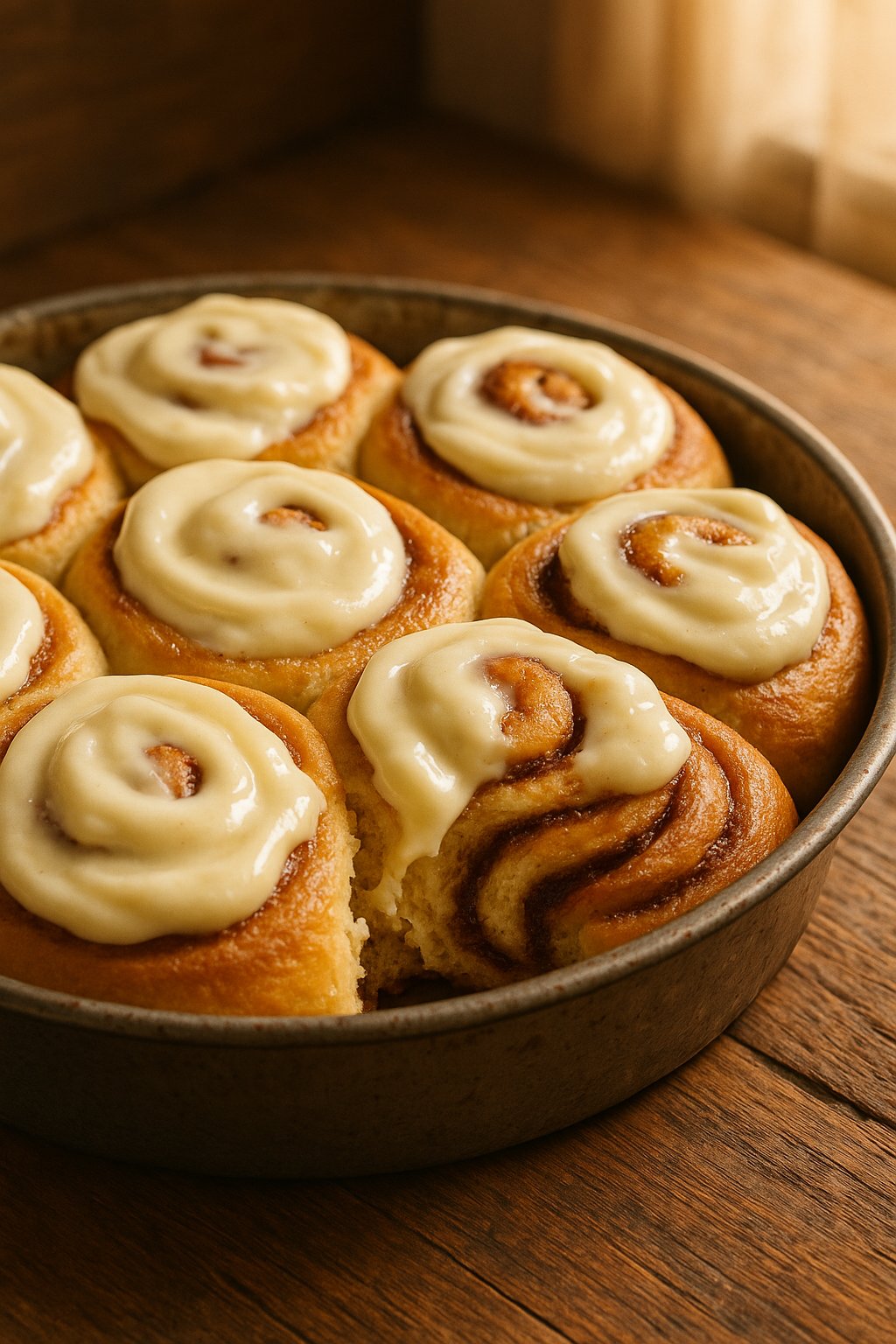
- Cream cheese frosting. Spread while the rolls are still warm, about ten minutes out of the oven, so it melts partway into the crevices without sliding off entirely.
Method
Prepare the proofing box: oven on lowest setting 2 minutes, then OFF. Boil a kettle.
Whisk the warm milk, yeast, and sugar; wait 5 minutes for foam. Then whisk in the melted butter, egg, and salt.
Add the flour, mix to a shaggy dough, and knead 5 minutes until smooth and slightly tacky.
First rise, 25 minutes, covered, in the warm oven with the pan of boiling water below.
Roll into a 16×12 rectangle, spread with the very soft butter, and scatter the cinnamon sugar evenly.
Roll up tightly from the long edge and cut into 12 with dental floss.
Second rise, 15 minutes, in the greased 9×13 back in the warm oven, until puffy and touching.
Remove the rolls and the water pan, heat the oven to 350°F, then bake 20–24 minutes, until golden and just set in the centre. Pull them when the middle rolls are barely set — overbaked cinnamon rolls go dry, and the centre ones always finish last.
Cool 10 minutes, then frost while warm.
Troubleshooting
- Dough did not rise. Dead yeast, or the milk was too hot. The foam test at the start is there to catch this before you waste the flour.
- Dense, heavy rolls. Too much flour, or under-kneaded.
- Dry. Overbaked. Twenty minutes and start checking.
- Filling leaked everywhere. Butter was melted rather than softened, or the log was rolled too loosely.
- Rolls squashed and oval. Cut with a knife. Use floss.
- Unrolled during baking. The seam was not sealed underneath. Place each roll seam-side down.
- Centre rolls underdone. Normal — they take longest. Give the pan a few extra minutes rather than pulling early.
Variations
- Overnight version. Do the first rise, shape and cut the rolls, then refrigerate the pan overnight instead of the second rise. In the morning, leave them out for 30 minutes and bake. Better for guests.
- Orange rolls. Orange zest in the filling and the frosting.
- Pecan. A cup of chopped pecans scattered over the filling before rolling.
- Caramel or sticky buns. Pour a mixture of melted butter, brown sugar, and cream into the pan before the rolls go in, then invert after baking.
- Apple. A finely diced apple over the filling.
- Simple glaze. If cream cheese frosting is too rich, whisk 1 1/2 cups powdered sugar with 3 tablespoons milk and a teaspoon of vanilla.
- Extra gooey. Pour 1/4 cup of heavy cream over the risen rolls just before baking. It sinks to the bottom and creates a caramel layer.
Storage and Make Ahead
Cover and keep at room temperature for 2 days, or refrigerated for 5. Reheat individual rolls in the microwave for 20 seconds — that softens them completely and re-melts the frosting.
The overnight refrigerator method above is the most practical make-ahead approach, and it is what I would do for a holiday morning.
Baked rolls freeze for up to 2 months, frosted or unfrosted. Thaw at room temperature and warm briefly. Unbaked shaped rolls also freeze — thaw overnight in the fridge, then let them rise at room temperature for about an hour before baking.
Questions
Why heat the oven and then turn it off?
It creates a warm, humid environment that roughly halves the rising time. The oven must be off — heat above 120°F kills yeast.
Can I use active dry yeast instead of instant?
Yes, but let it proof in the warm milk for 10 minutes rather than 5, and expect the rises to take a little longer.
Why cut with dental floss?
A knife compresses the spiral and flattens the roll. Floss cuts by tension and keeps them perfectly round.
How do I know the dough is kneaded enough?
It should be smooth and slightly tacky, springing back slowly when poked. Five minutes by hand is usually right.
Can I make these the night before?
Yes — shape and cut them, refrigerate overnight in the pan, then rest 30 minutes at room temperature and bake.
Why are my rolls dry?
Overbaked, or too much flour worked into the dough. Pull them when the centre is just set.
Can I halve the recipe?
Yes, into an 8×8 pan for 6 rolls. The timings stay about the same.
Easy One-Hour Cinnamon Rolls
Ingredients
Method
- Heat the oven to its lowest setting for 2 minutes, then turn it OFF. Bring a kettle of water to a boil and set it aside — you will use both for the rise.
- Whisk the warm milk, yeast, and sugar together in a large bowl and let it sit for 5 minutes until foamy. Whisk in the melted butter, egg, and salt.
- Add the flour and mix until a shaggy dough forms, then knead for 5 minutes by hand or 3 minutes with a dough hook, until smooth and slightly tacky.
- Cover the bowl. Pour the boiled water into a pan on the oven's bottom rack, put the dough on the middle rack, and close the door. Let it rise 25 minutes, until nearly doubled.
- Roll the dough on a floured surface into a 16x12-inch rectangle. Spread the very soft butter edge to edge, then mix the brown sugar and cinnamon and scatter it evenly over the butter.
- Roll the dough up tightly from the long edge. Cut into 12 rolls using unflavored dental floss slid underneath and pulled through — a knife flattens the spiral.
- Arrange the rolls in a greased 9x13-inch pan. Return them to the warm oven (with the water pan) for a 15-minute second rise, until puffy and touching.
- Take the rolls and the water pan out. Heat the oven to 350°F, then bake for 20 to 24 minutes, until golden and just set in the center.
- Beat the cream cheese, butter, powdered sugar, vanilla, and milk until smooth. Let the rolls cool 10 minutes, then spread the frosting over them while still warm.