Crispy Baked Chicken Tenders
Baked chicken tenders are usually a compromise. You accept that they will be a bit pale and a bit soft in exchange for not filling the kitchen with frying oil, and everyone at the table quietly wishes they were fried.
There is one technique that removes the compromise almost entirely, and it takes four minutes: toast the panko in a skillet before you bread anything. Once I started doing that, I stopped frying tenders altogether.
Toasting the Panko Is the Whole Trick
Here is the problem with baked breaded food. Breadcrumbs turn golden and crisp because of browning reactions that need both high heat and dry conditions. In an oven, the breading sits on top of a piece of raw chicken that is releasing steam the entire time it cooks. The chicken hits 165°F and is done long before the coating on top has had a chance to dry out and colour. So you pull out pale, slightly damp tenders.
Frying solves this by surrounding the breading with 350°F oil, which browns it in ninety seconds. Toasting solves it a different way: you simply brown the breadcrumbs first, in a dry skillet with a little olive oil, before they ever touch the chicken. By the time they go into the oven they are already golden and crisp, and the oven’s only remaining job is cooking the chicken through.
Do this and the tenders come out of the oven the colour and texture you actually wanted. It is the single highest-return technique in this entire recipe, and it is the step people skim past.
Two details when you toast: use medium heat and stir constantly, because panko goes from golden to burnt in about twenty seconds. And stir the seasonings in after the crumbs are toasted, not before — paprika and garlic powder scorch and turn bitter over direct heat.
The Breading Station, and Why Each Layer Exists
Flour, then egg, then panko. Each layer has a job and skipping one is why breading falls off.
Flour gives the wet surface of the chicken something dry to grip. Egg slides straight off bare, damp chicken. Pat the tenders dry with paper towels first — this matters — then coat lightly in flour and shake off the excess. A thick layer of flour turns gummy under the egg.
Egg is the glue. Let the excess drip off for a couple of seconds before moving to the crumbs; a flood of egg makes the panko clump into a heavy paste.
Panko is the armour. Press it on firmly rather than sprinkling it — real pressure with your palm, so it adheres. Use one hand for the wet stages and one for the dry, or within three tenders both your hands will be wearing thick batter gloves.
Panko rather than regular breadcrumbs, by the way. Panko is made from crustless bread dried into large, jagged flakes, so it stays open and crunchy instead of packing into a dense layer that goes soft.
Ingredient Notes
- Chicken tenders (1.5 lbs). The tenderloin strips sold as tenders are ideal because they are uniform and thin. You can cut chicken breasts into 1-inch strips instead; try to keep them even so they finish together. Remove the white tendon if it is still attached.
- Panko (2 cups). Not seasoned Italian breadcrumbs, which are finer and already salted.
- Olive oil (2 tbsp). Used to toast the panko. It carries the browning and adds flavour, and it means you do not need to spray the tenders before baking.
- Paprika and garlic powder (1 tsp each). Paprika contributes as much colour as flavour, which helps the finished tenders look right. Smoked paprika is a good swap.
- Salt (1 tsp). Mixed into the panko so it seasons the crust. Season the chicken itself lightly too if you like.
Method
Heat the oven to 425°F and line a sheet with parchment. High heat is deliberate — it cooks the chicken fast enough that it stays juicy.
Toast the panko with the olive oil in a skillet over medium heat, stirring constantly, until evenly golden. Four to five minutes. Take it off the heat, then stir in the garlic powder, paprika, salt, and pepper. Tip it into a shallow dish to cool slightly.
Set up the three stations — flour, beaten eggs, toasted panko — in a row, with the baking sheet at the end.
Bread each tender: flour, shake off; egg, drip off; panko, press firmly on both sides.
Arrange on the sheet with space between them. Crowding traps steam and softens the crust. Use two sheets if you need to. A wire rack set on the sheet is even better, since it lets air circulate underneath and keeps the bottoms from going soggy — worth doing if you own one.
Bake 18–20 minutes without flipping. Because the crumbs are already toasted, there is no need to turn them, and flipping mostly just knocks the coating off. They are done at an internal temperature of 165°F; a thermometer in the thickest tender is far more reliable than cutting one open.
Troubleshooting
- Breading fell off. The chicken was wet, the flour step was skipped, or the panko was not pressed on. Pat dry and press firmly.
- Still pale. The panko was not toasted enough. It should be properly golden in the skillet, not just warm.
- Soggy underneath. Crowded pan, or no rack. Give them space.
- Dry chicken. Overbaked. Tenders are thin and go from done to dry quickly — start checking at 16 minutes.
- Bitter or burnt taste. The spices went into the skillet with the panko instead of after. Add them off the heat.
Variations and Dipping Sauces
- Parmesan. Stir 1/3 cup of grated parmesan into the toasted panko once it has cooled a little.
- Spicy. Add 1/2 teaspoon of cayenne to the crumb mixture, or toss the finished tenders in a mix of melted butter and hot sauce for a buffalo version.
- Ranch seasoning. A tablespoon of dry ranch mix stirred into the panko in place of the garlic powder.
- Air fryer. 400°F for 10–12 minutes in a single layer. The panko still benefits from toasting first.
- Gluten-free. Gluten-free panko and a gluten-free flour blend both substitute directly.
- Sauces. Honey mustard (equal parts honey and dijon with a spoonful of mayonnaise), barbecue, ranch, or a garlic aioli. Honey mustard is the right answer.
Storage and Reheating
Refrigerate leftovers for up to 3 days in an airtight container. Reheating is where breaded food usually dies, so: use the oven or an air fryer, never the microwave. A microwave steams the coating and turns it to wet bread. Ten minutes at 375°F in the oven, or 5 minutes at 375°F in an air fryer, brings the crunch back almost completely.
These freeze well once baked. Cool completely, freeze in a single layer on a tray, then bag them for up to 3 months. Reheat from frozen at 375°F for 15–18 minutes.
You can also bread them ahead and refrigerate unbaked for up to 8 hours — useful if you are cooking for a group and want the messy part done early.
Serving Ideas
Fries or roasted potato wedges and something green is the standard. Sliced over a caesar salad turns them into a proper lunch. Cut up in a wrap with lettuce and ranch. They are also one of the more reliable things to make when feeding children and adults the same dinner, with the adults getting the spicy sauce.
Questions
Do I really need to toast the panko?
If you want them crisp and golden, yes. Skipping it is the difference between these and every disappointing baked tender you have had.
Can I use chicken breast instead of tenders?
Yes — cut into strips about an inch wide and keep them even. Adjust the time slightly for thicker pieces and check the temperature.
Can I make these without eggs?
Buttermilk or plain yogurt thinned with a little milk both work as the binding layer, though the coating adheres slightly less tenaciously.
Why is a wire rack better?
It lifts the tenders so hot air reaches the underside. Without one, the bottom sits against the pan in its own steam and softens.
What temperature should the chicken reach?
165°F in the thickest part. Use a thermometer — tenders are small and easy to overshoot.
Can I prepare them in advance for a party?
Bread them up to 8 hours ahead and refrigerate, then bake just before serving. Fully baked tenders held in a 200°F oven stay decent for about 30 minutes before the crust starts to soften.
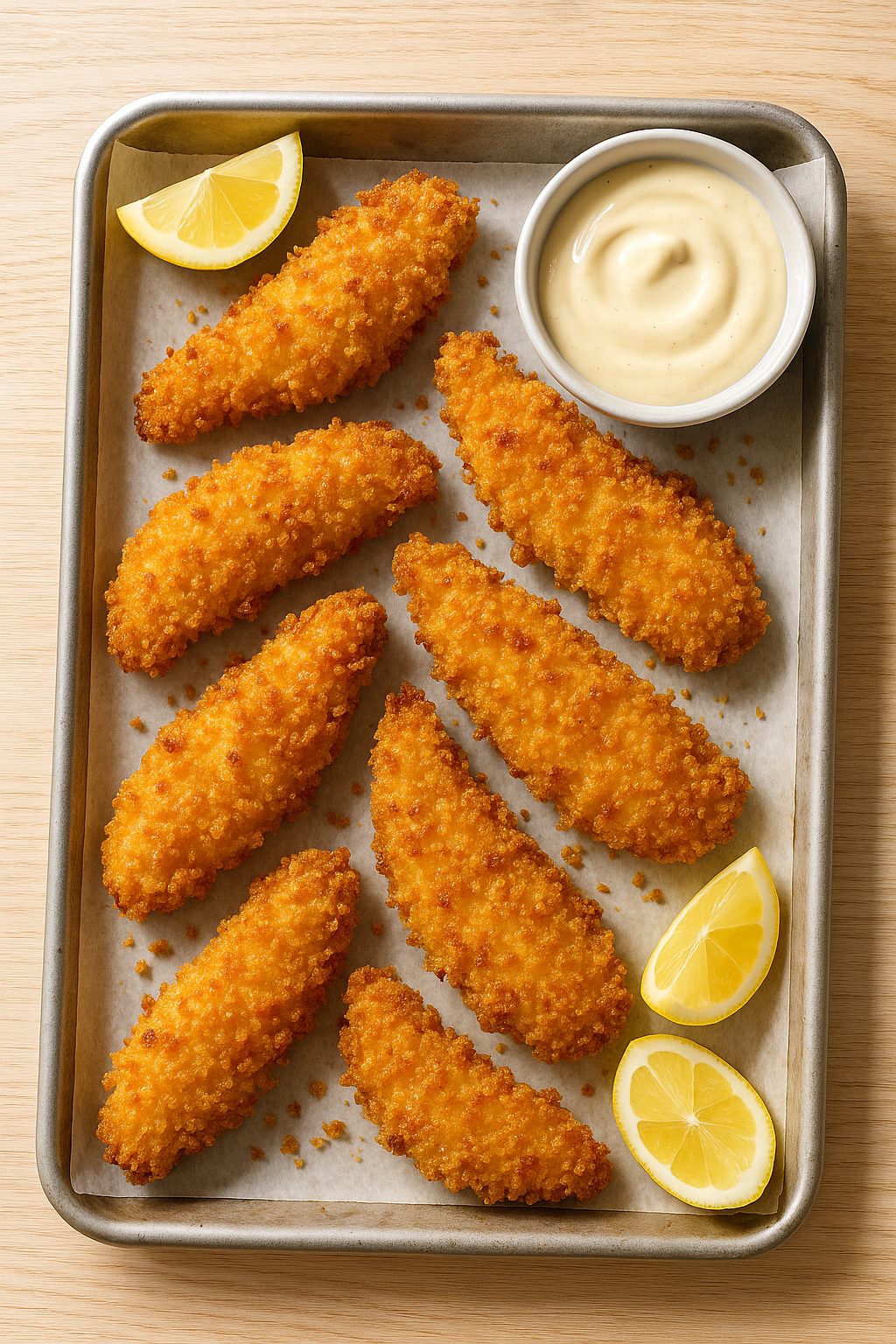
Crispy Baked Chicken Tenders
Ingredients
Method
- Preheat the oven to 425°F (220°C) and line a baking sheet with parchment.
- Toast the panko with the olive oil in a skillet over medium heat until golden, then stir in the garlic powder, paprika, salt, and pepper.
- Set up a breading station: flour, beaten eggs, and the toasted panko.
- Coat each tender in flour, then egg, then press into the panko.
- Arrange on the baking sheet and bake for 18-20 minutes, until golden and cooked through (165°F).
- Serve with your favorite dipping sauce.