Honey Garlic Chicken Stir-Fry
Stir-fry is one of those dishes that seems like it should be foolproof and then somehow produces steamed grey chicken sitting in a puddle. Mine did, reliably, until I understood that almost every problem with a home stir-fry traces back to the same cause: the pan is not hot enough and there is too much in it.
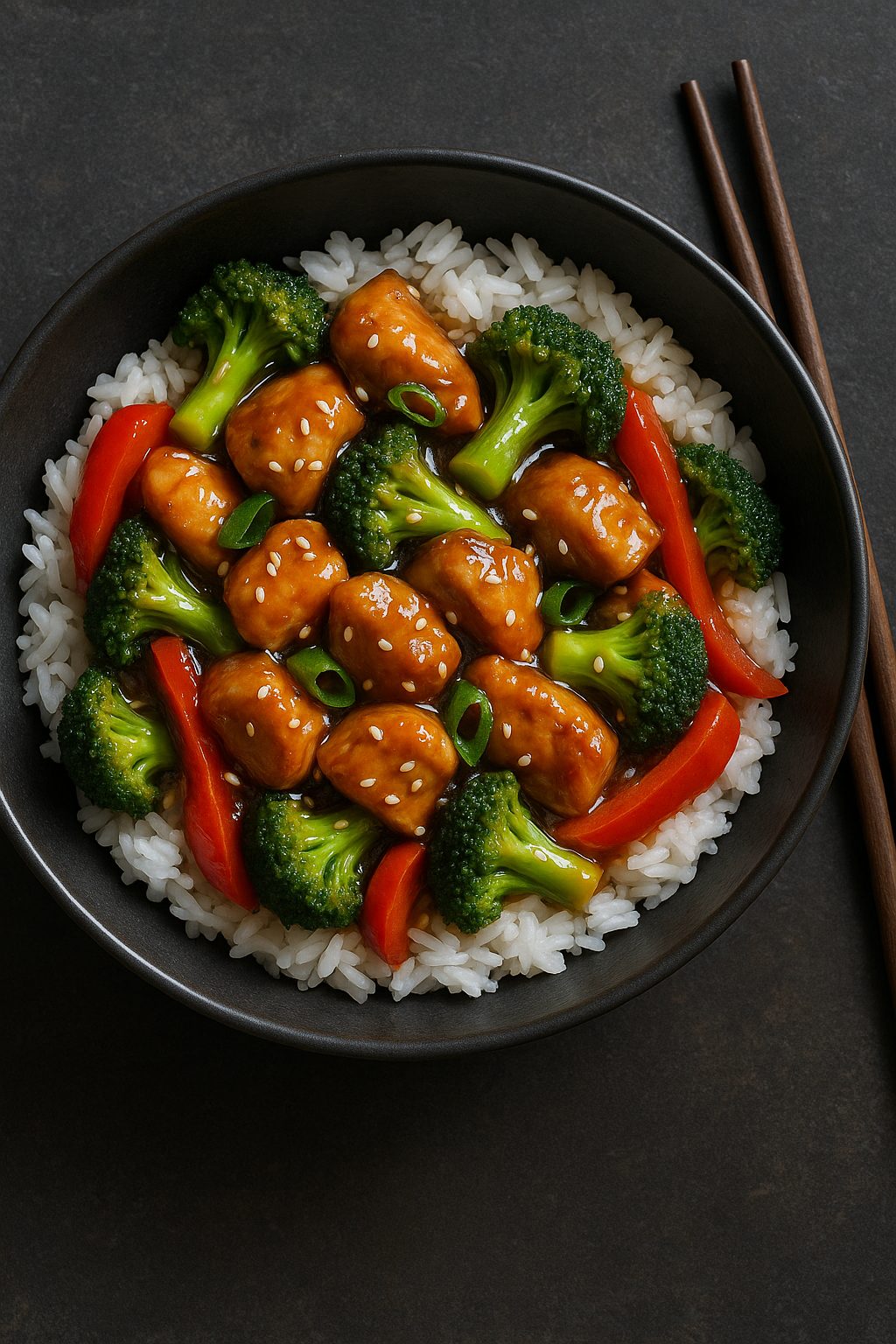
Once I fixed that, this became a genuine thirty-minute weeknight dinner — glossy honey-garlic sauce, chicken with actual browned edges, and broccoli that still has some snap to it. The sauce is four ingredients whisked in a bowl while the pan heats.
The Cornstarch Is Doing Two Jobs
Tossing the cubed chicken in cornstarch before it hits the pan is the step that looks skippable and absolutely is not.
The first job is texture. That thin coating is a simplified version of a Chinese technique called velveting. It forms a barrier that holds moisture inside the chicken while the outside sears, which is why restaurant stir-fry chicken is tender and home versions often are not. It also browns faster and more evenly than bare chicken.
The second job happens at the end. As the sauce hits the hot pan, residual cornstarch from the chicken dissolves into it and thickens it. That is why this recipe has no separate cornstarch slurry — the thickener is already on the meat. It is why the sauce goes from watery to glossy and clinging in about ninety seconds.
Heat, Space, and Why Most Stir-Fries Fail
Chicken releases water when it cooks. If the pan is hot enough, that water evaporates on contact and the meat browns. If the pan is not hot enough, or if it is crowded, the water pools, the temperature drops, and the chicken sits in its own liquid and steams. Steamed chicken is pale, slightly rubbery, and it will not brown no matter how long you wait.
So: get the pan properly hot before anything goes in — the oil should shimmer and move easily. Use the largest skillet or wok you own. And if a pound of chicken looks crowded in your pan, cook it in two batches. Two batches takes four extra minutes and is the difference between the dish working and not.
The same logic applies to the vegetables, which is why they get their own turn in the pan after the chicken comes out.
Ingredient Notes
- Chicken breast (1 lb, cubed). Cut into even 1-inch cubes so they cook at the same rate. Boneless thighs work too and are more forgiving — they stay juicy even if you leave them a minute too long.
- Cornstarch (2 tbsp). Toss until the chicken looks lightly dusted, not gluey. If it clumps, you have too much moisture on the meat — pat it dry with paper towels first.
- Honey (1/4 cup). This is the backbone of the sauce and it also burns. It is why the sauce goes in at the very end rather than as a marinade — honey over sustained high heat turns bitter and black.
- Soy sauce (3 tbsp). All the salt in the dish comes from here. If you use low-sodium, expect to need a pinch of salt at the end. Tamari works for a gluten-free version.
- Rice vinegar (1 tbsp). Small quantity, big effect. Without it the sauce is just sweet and salty and tastes flat. The acid is what makes it taste finished.
- Fresh ginger (1 tsp, grated). Fresh, not powdered — they are not interchangeable here. Grate it on a microplane, skin and all, and it disappears into the sauce.
- Garlic (3 cloves, minced). Goes into the sauce bowl rather than the pan, so it never has the chance to burn.
- Broccoli and red bell pepper. Cut the broccoli into small florets — large ones stay raw in the middle. The pepper is mostly there for color and sweetness and cooks faster, so slice it thick.
How to Make It
Prep everything before you turn on the heat. Stir-frying takes about twelve minutes total and there is no point in it where you can stop to chop a pepper. Chicken cubed and tossed in cornstarch, vegetables cut, sauce whisked, rice already cooking.
Whisk the sauce in a small bowl: honey, soy sauce, rice vinegar, ginger, garlic. Set it next to the stove.
Cook the chicken first, 5–6 minutes over medium-high. Spread the cubes in a single layer and leave them undisturbed for the first two minutes to let a crust form. Then toss occasionally until golden all over and cooked through. Move it to a plate.
Stir-fry the vegetables 4–5 minutes in the remaining oil. Broccoli and pepper together, moving them frequently. You want crisp-tender: bright green, still with a bite, blistered in a few spots. If the broccoli is browning before it softens, add a tablespoon of water to the pan and let the steam finish it.
Return the chicken, pour in the sauce, and cook 2–3 minutes. Stir constantly. The sauce will look thin and worrying for the first minute, then thicken quite suddenly into a glaze that coats everything. Pull it off the heat as soon as it does — it keeps thickening, and going too far gives you a sticky, candy-like coating.
Finish with sesame seeds and sliced green onion and serve immediately over rice.
Fixes for Common Problems
- Chicken is pale and rubbery. Pan too cool or too crowded. Cook in two batches next time.
- Sauce never thickened. Not enough residual cornstarch, or the heat was too low. Whisk 1 teaspoon of cornstarch with 1 tablespoon of cold water and stir it in.
- Sauce is too thick and gluey. Overcooked at the end. Loosen with a splash of water off the heat.
- Bitter, burnt notes. The honey or garlic caught. Keep the sauce out of the pan until the final two minutes.
- Soggy broccoli. Cooked too long, or added while the pan was full of liquid. Crisp-tender means less time than feels right.
Swaps and Additions
- Different vegetables. Snap peas, carrots cut on a bias, mushrooms, baby corn, or bok choy all work. Add dense vegetables first and quick ones later.
- Shrimp. Skip the cornstarch toss and stir-fry for 90 seconds a side. Add a teaspoon of cornstarch to the sauce instead.
- Tofu. Press extra-firm tofu, cube it, toss in cornstarch, and pan-fry until crisp on several sides before setting aside.
- Spicy. A tablespoon of sriracha or a teaspoon of chili crisp whisked into the sauce.
- Sesame oil. A teaspoon stirred in off the heat at the very end. Do not cook with it — its smoke point is low and heat destroys the aroma.
Serving and Leftovers
Steamed jasmine rice is the default and the best vehicle for the sauce. Brown rice works, and so do rice noodles tossed straight into the pan at the end. For a lower-carb version, cauliflower rice is fine though it does not absorb sauce the same way.
Leftovers keep 3 days in the fridge. Reheat in a skillet over medium heat rather than the microwave — the microwave overcooks the chicken and leaves the broccoli limp. A splash of water helps loosen the sauce, which sets firm when cold.
This freezes acceptably for up to 2 months, though the broccoli softens considerably on thawing. If you know you are freezing a portion, undercook the vegetables slightly.
For meal prep, portion it over rice in containers while everything is still hot, then cool and refrigerate. It holds up better than most stir-fries because the cornstarch-based sauce does not separate.
Questions
Can I marinate the chicken in the sauce first?
Better not to. The honey will burn during the sear, and you need the sauce intact at the end to form the glaze.
Do I need a wok?
No. A large heavy skillet works well, and on a standard home burner a flat-bottomed skillet actually heats more evenly than a round wok does. What matters is size and heat, not shape.
Can I use frozen broccoli?
You can, but it releases a lot of water and will not get any browning. Thaw and pat it very dry first, and add it later in the cook.
Is there a substitute for rice vinegar?
Apple cider vinegar is the closest, or white wine vinegar. Use slightly less as both are sharper.
How do I make it gluten-free?
Use tamari or a certified gluten-free soy sauce. Cornstarch is naturally gluten-free, so nothing else needs to change.
Can I double it?
Yes, but cook the chicken in at least three batches and the vegetables in two. Doubling everything into one pan is the fastest way to end up steaming instead of stir-frying.
Honey Garlic Chicken Stir-Fry
Ingredients
Method
- Toss the cubed chicken with the cornstarch until lightly coated.
- In a small bowl, whisk together the honey, soy sauce, rice vinegar, ginger, and garlic to make the sauce.
- Heat 1 tablespoon of oil in a large skillet or wok over medium-high heat. Cook the chicken for 5-6 minutes, until golden and cooked through. Transfer to a plate.
- Add the remaining oil, then the bell pepper and broccoli. Stir-fry for 4-5 minutes, until crisp-tender.
- Return the chicken to the pan and pour in the sauce. Cook for 2-3 minutes, stirring, until the sauce thickens and coats everything.
- Serve over rice, topped with sesame seeds and green onion.