One-Pot Creamy Garlic Parmesan Pasta
The appeal here is not complicated: the pasta cooks directly in the liquid that becomes its sauce, so there is no colander, no separate pot of salted water, and nothing to drain. Twenty-five minutes, one pan, and the starch that would normally go down the sink is exactly what makes the sauce creamy.
I was skeptical of one-pot pasta for a long time, mostly because the first few I tried came out gummy. It turns out that is a fixable problem, and it comes down to two things: the ratio of liquid to pasta, and stirring more often than you think you need to.
How the Sauce Makes Itself
When you boil pasta in a big pot of water, the starch that leaches out of the noodles gets diluted into gallons of water and then poured away. That starch is a powerful thickener — it is the reason experienced cooks save a cup of pasta water to finish a sauce.
This method uses just enough liquid that the pasta absorbs most of it, and what remains is heavily concentrated with that released starch. By the time the noodles are tender, the liquid has gone from thin broth to something that clings. Adding parmesan and butter off the heat at the end emulsifies it into an actual sauce. No cream, no roux, no flour.
The catch is that concentrated starch also sticks to the bottom of the pan and scorches if left alone. That is the whole reason for the frequent stirring, and it is not optional.
Ingredient Notes
- Fettuccine or linguine (12 oz). Long, flat shapes work best because they lie in the liquid and release starch evenly. Short shapes like penne work but need a bit less liquid. Do not use fresh pasta — it cooks in three minutes and will turn to mush long before the sauce reduces.
- Broth (3 cups). Chicken broth gives more depth, vegetable broth keeps it meat-free. This is where nearly all the seasoning comes from, so use a broth you would happily drink. If yours is low-sodium you will need noticeably more salt at the end.
- Whole milk (1 cup). Whole, not skim. There is no cream in this recipe, so the milk fat is doing the work of making the sauce taste rich. Skim milk produces a thin, slightly chalky sauce.
- Parmesan (1 cup, grated). Grate it from a block. This matters more here than in most recipes because the parmesan is the primary thickener at the end — pre-grated cheese is coated in starch to stop it clumping in the bag, and that coating stops it melting smoothly in the pan.
- Garlic (4 cloves, minced). Four cloves sounds aggressive and is correct. It mellows considerably over 15 minutes of simmering.
- Butter (2 tbsp). Added at the very end, off the heat. It rounds out the sauce and gives it gloss.
- Black pepper (1/2 tsp). Freshly ground if possible. With this few ingredients, each one is noticeable.
The Method
Use a wide, deep pan. A large skillet with high sides or a shallow Dutch oven. The pasta needs to lie mostly flat in the liquid, and a narrow saucepan forces it into a clump that cooks unevenly.
Cook the garlic in the oil for 30 seconds over medium heat. Fragrant, not browned. Burnt garlic at this stage will flavor the entire dish and there is no recovering from it.
Add the pasta, broth, and milk and bring to a gentle boil. If your noodles are too long to lie flat, let them soften for a minute and then press them down — do not snap them in half unless you want to.
Reduce to a simmer and cook 12–15 minutes, stirring often. Often means every couple of minutes, scraping the bottom of the pan each time. This is the step that decides whether the dish works. The liquid will look alarmingly thin for the first eight minutes or so and then thicken quite suddenly near the end.
Judge doneness by the pasta, not the clock. Taste a strand. It should be tender with the barest resistance in the middle. The liquid should have reduced to a loose, glossy sauce that just coats the noodles — it will continue to thicken off the heat, so stop while it still looks slightly too saucy.
Turn off the heat before adding the cheese. This is the second thing that decides whether the dish works. Parmesan added to a boiling liquid seizes into stringy clumps. Off the heat, stir in the parmesan, butter, and pepper until it melts into something smooth and glossy.
Taste and salt at the end. Never before — parmesan and broth are both salty, and the liquid concentrates as it reduces. Salting early is how this dish becomes inedible.
Serve immediately. This is not a dish that waits. The pasta keeps absorbing liquid, and ten minutes on the counter turns sauce into paste.
What Goes Wrong, and Why
- Gummy or gluey. Too little liquid, or it sat too long before serving. Loosen it with a splash of hot broth and stir vigorously.
- Stuck and scorched on the bottom. Not stirred often enough, or the simmer was too vigorous. Keep it at a lazy bubble.
- Stringy, clumped cheese. Added while the pan was still hot, or pre-grated cheese. Off the heat, freshly grated.
- Watery and thin. The pasta was done before the liquid reduced. Simmer another couple of minutes, or stir in an extra handful of parmesan.
- Bland. Almost always under-salted at the end, or a weak broth. Salt in small increments and taste as you go.
Ways to Build on It
- Add chicken. Sear seasoned strips of chicken breast in the pan first, set them aside, and stir them back in at the end. The browned bits left in the pan improve the sauce considerably.
- Add shrimp. Stir raw shrimp in for the last 3 minutes of the simmer — any longer and they toughen.
- Greens. A few big handfuls of spinach folded in during the final minute, or broccoli florets added for the last 5 minutes of cooking.
- Bacon or pancetta. Render it first, use the fat instead of the olive oil, and scatter the crisped pieces over the top.
- Lemon. The zest of one lemon stirred in at the end cuts the richness and wakes the whole thing up. This is my favorite small addition.
- Heat. Red pepper flakes with the garlic.
Serving and Storage
A green salad with a sharp vinaigrette is the right partner — the dish is rich and needs acid alongside it. Garlic bread is tempting but is arguably redundant. Roasted asparagus or broccoli works if you want a vegetable on the plate rather than in the pan.
Leftovers keep for 3 days refrigerated, with the caveat that this dish is genuinely at its best in the first ten minutes of its life. The pasta absorbs the remaining sauce overnight and comes out of the fridge as a solid block. To revive it, reheat gently in a skillet with a generous splash of milk or broth, stirring until it loosens back into something saucy. Add a little fresh parmesan at the end.
Freezing is not recommended. Cooked pasta in a dairy sauce comes out of the freezer with a mealy texture, and there is no reheating technique that fixes it.
Questions
Can I use a different pasta shape?
Yes. Short shapes like penne or rotini work; reduce the broth to about 2 3/4 cups since they absorb slightly less. Avoid fresh pasta and avoid anything very thin like angel hair, which overcooks before the sauce reduces.
Can I make it with cream instead of milk?
You can substitute 1/2 cup of heavy cream plus 1/2 cup of broth for the milk. It is richer, though the starch method already gives you most of that effect without it.
Why does the sauce disappear after a few minutes?
The pasta keeps drinking it. That is normal. Stop cooking while the sauce still looks slightly loose, and serve straight away.
Can I halve the recipe?
Yes — halve everything and use a smaller pan so the pasta still sits in the liquid. Start checking at 10 minutes.
Is there a dairy-free version?
Use unsweetened oat milk (it is the creamiest of the alternatives) and swap the parmesan for 1/3 cup of nutritional yeast plus an extra tablespoon of olive oil. The sauce will be thinner but the starch method still does most of the work.
Do I really need to stir that often?
Yes. This is the one instruction in the recipe that people skip and then regret. The starch concentration that makes the sauce is the same thing that welds pasta to the bottom of a pan.
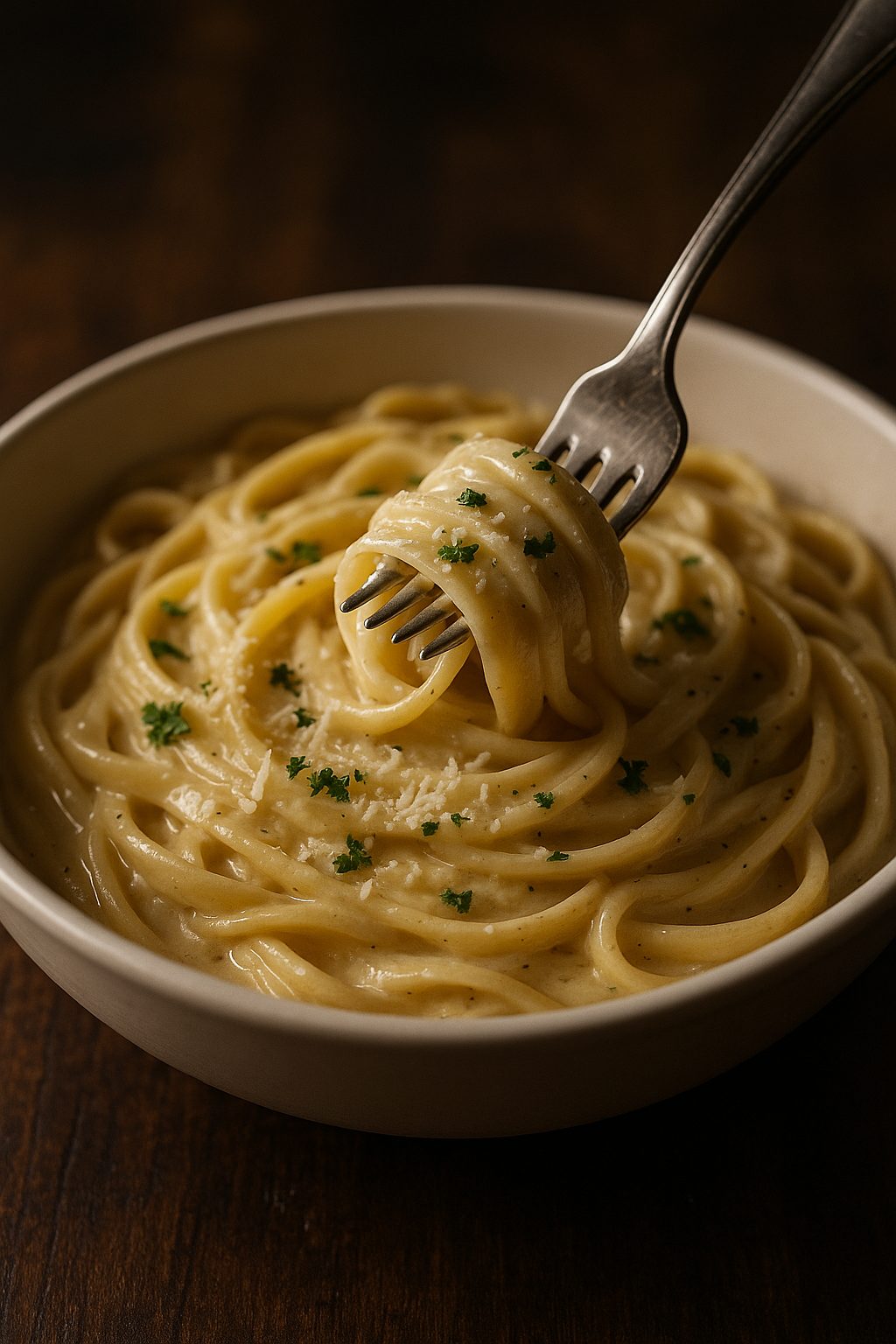
One-Pot Creamy Garlic Parmesan Pasta
Ingredients
Method
- Heat the olive oil in a large deep skillet or pot over medium heat. Add the garlic and cook for 30 seconds, until fragrant.
- Add the uncooked pasta, broth, and milk. Bring to a gentle boil.
- Reduce to a simmer and cook, stirring often to prevent sticking, for 12-15 minutes, until the pasta is tender and the liquid has reduced to a creamy sauce.
- Turn off the heat and stir in the parmesan, butter, and black pepper until melted and smooth.
- Season with salt to taste, garnish with parsley, and serve immediately.