Baked Lemon Herb Chicken Thighs
Bone-in, skin-on chicken thighs are the most forgiving protein in the kitchen and probably the best value on the meat counter. They are hard to dry out, they cost a fraction of what breasts do, and they produce pan juices that are worth a recipe on their own.
This one is close to effortless: whisk a marinade, pour it over, roast at high heat for forty minutes. The two things that decide whether the skin comes out crisp and golden or pale and flabby are both simple, and both easy to get wrong.
Dry Skin and High Heat
Pat the thighs properly dry. Chicken skin crisps when its moisture evaporates and the fat underneath renders out. Any water sitting on the surface has to boil off first, and while it does, the skin is steaming rather than roasting. Take a few paper towels and dry each thigh thoroughly, top and bottom. If you have time, leave them uncovered on a rack in the fridge for an hour, or overnight — the cold dry air dehydrates the skin surface and gives you the crispiest possible result. It sounds fussy and it is genuinely transformative.
Roast at 425°F. High heat renders the fat quickly and browns the skin before the meat overcooks. At 350°F you get chicken that is technically cooked with skin that never crisped.
One consequence of the marinade here: it is liquid, and liquid works against crisp skin. So rub it into the skin rather than leaving the thighs sitting in a pool. Arrange them skin side up, with space between them, and if the dish has collected a lot of liquid at the bottom, spoon a little out. Crowding is the other enemy — thighs packed together steam each other.
Cook Thighs to 175°F, Not 165°F
This is worth saying clearly because it contradicts the number everyone knows.
165°F is the food-safety threshold and it is correct for chicken breast, which dries out immediately past it. Thighs are different. They are working muscle, full of connective tissue and collagen, and that collagen does not begin breaking down into gelatin until well above 165°F. A thigh pulled at 165°F is safe but slightly chewy and rubbery. The same thigh at 175–180°F is noticeably more tender and succulent, because the collagen has melted.
So take the temperature in the thickest part, avoiding the bone, and aim for 175°F. You genuinely cannot easily overcook a chicken thigh, which is why they are such a forgiving thing to cook.
Ingredient Notes
- Bone-in, skin-on thighs (8). The bone insulates the meat and keeps it juicy; the skin bastes it as the fat renders. Boneless skinless thighs work but cook much faster — about 25 minutes — and you lose the crisp skin entirely.
- Lemon, juiced and zested. Use both. The juice brings acidity, but the zest is where the aromatic oils are, and it is what makes this taste properly of lemon rather than just sour. Zest before you juice; it is much harder afterwards.
- Garlic (4 cloves, minced). Rubbed under and over the skin. Some will darken during the roast, which is fine, but keep it out of direct contact with the bare pan where it will burn.
- Dried oregano and thyme (1 tsp each). Dried rather than fresh for the marinade — dried herbs hold up over forty minutes of high heat, whereas fresh ones scorch and turn black.
- Olive oil (2 tbsp). Helps the seasonings adhere and conducts heat into the skin.
- Fresh parsley. Added after roasting, for colour and freshness.
Method
Heat the oven to 425°F and let it come fully to temperature.
Pat the thighs very dry and arrange them skin side up in a baking dish, not touching.
Whisk the olive oil, garlic, lemon juice and zest, oregano, thyme, salt, and pepper.
Pour it over and rub it into the skin. Get some underneath the skin too if you can slide a finger under — it seasons the meat directly rather than just the surface. Then turn them all skin side up again and make sure the tops are not swimming.
Roast 35–40 minutes, until the skin is deep golden and the internal temperature reads 175°F. If the skin is not as browned as you want at the end, run it under the broiler for 2–3 minutes, watching constantly.
Rest 5 minutes, then scatter with parsley and serve with the pan juices. Do not throw those juices away — they are rendered chicken fat, lemon, garlic, and herbs, and they are the best thing on the plate. Spoon them over whatever starch you are serving.
Troubleshooting
- Skin is soft and pale. Chicken was wet, the pan was crowded, the thighs were sitting in liquid, or the oven was too cool.
- Meat is chewy. Undercooked, counterintuitively. Take it to 175°F.
- Garlic burnt. Loose minced garlic on the bare dish surface catches. Rub it onto the chicken instead.
- Too much liquid in the dish. Some is normal from rendering. If it is deep enough to submerge the skin, spoon it off partway through and reserve it.
- Bland. Under-salted, or the marinade only sat on the surface. Season generously and work it under the skin.
Variations
- Make it a full sheet pan meal. Toss halved baby potatoes and carrots with oil and scatter them around the thighs. They roast in the rendered chicken fat, which is the best thing that can happen to a potato. Add 5–10 minutes.
- Mediterranean. Add halved cherry tomatoes, olives, and thin lemon slices to the dish for the last 20 minutes.
- Honey lemon. Whisk a tablespoon of honey into the marinade for a glazed, slightly sticky skin. Watch it more closely, since honey browns fast.
- Garlic butter. Substitute melted butter for the olive oil.
- Spicy. A teaspoon of red pepper flakes or smoked paprika in the marinade.
- Marinate ahead. The mixture can sit on the chicken for up to 8 hours in the fridge. Longer than that and the lemon acid starts to break down the surface of the meat and make the texture slightly chalky.
Storage and Reheating
Refrigerate for up to 4 days along with the pan juices, which will set into a savory jelly when cold — that is a good sign, it means there was real gelatin in there.
Reheat in a 375°F oven for about 15 minutes, uncovered, which brings some of the skin crispness back. The microwave works for speed but turns the skin soft and slightly rubbery, so if you are microwaving, you may as well pull the skin off and shred the meat.
Cooked thighs freeze for up to 3 months. The skin does not survive it well, so freeze them with the intention of shredding the meat for tacos, soups, salads, or pasta rather than serving them whole.
Leftover shredded thigh meat is genuinely useful. It has more flavour and holds moisture far better than leftover chicken breast.
What to Serve With It
Something to soak up the pan juices is the priority: rice, orzo, mashed potatoes, or good bread. Roasted vegetables cooked alongside in the same dish are the least-effort option. A sharp green salad or roasted asparagus with lemon keeps the whole plate bright. Couscous with herbs is a good match for the Mediterranean variation.
Questions
Can I use boneless skinless thighs?
Yes. Reduce the time to about 25 minutes at 425°F and check for 175°F. You lose the crisp skin and the pan juices are thinner, but it is still a good dish.
Can I use chicken breasts?
You can, but the marinade and temperature are built around thighs. Breasts need to come out at 165°F and around 25 minutes, and they will not be as forgiving.
Why 175°F instead of 165°F?
165°F is safe, but thigh meat is full of collagen that only breaks down above that. The extra ten degrees makes them noticeably more tender.
Can I marinate overnight?
Up to 8 hours is ideal. Beyond that the lemon juice starts to affect the texture of the meat.
Do I have to use a baking dish?
A rimmed sheet pan actually gives crisper skin because the liquid spreads thin and evaporates rather than pooling. Use one if you care more about the skin than about the quantity of pan juices.
How many thighs per person?
Two for a normal appetite, which is what serves four here. One each if there is a substantial side.
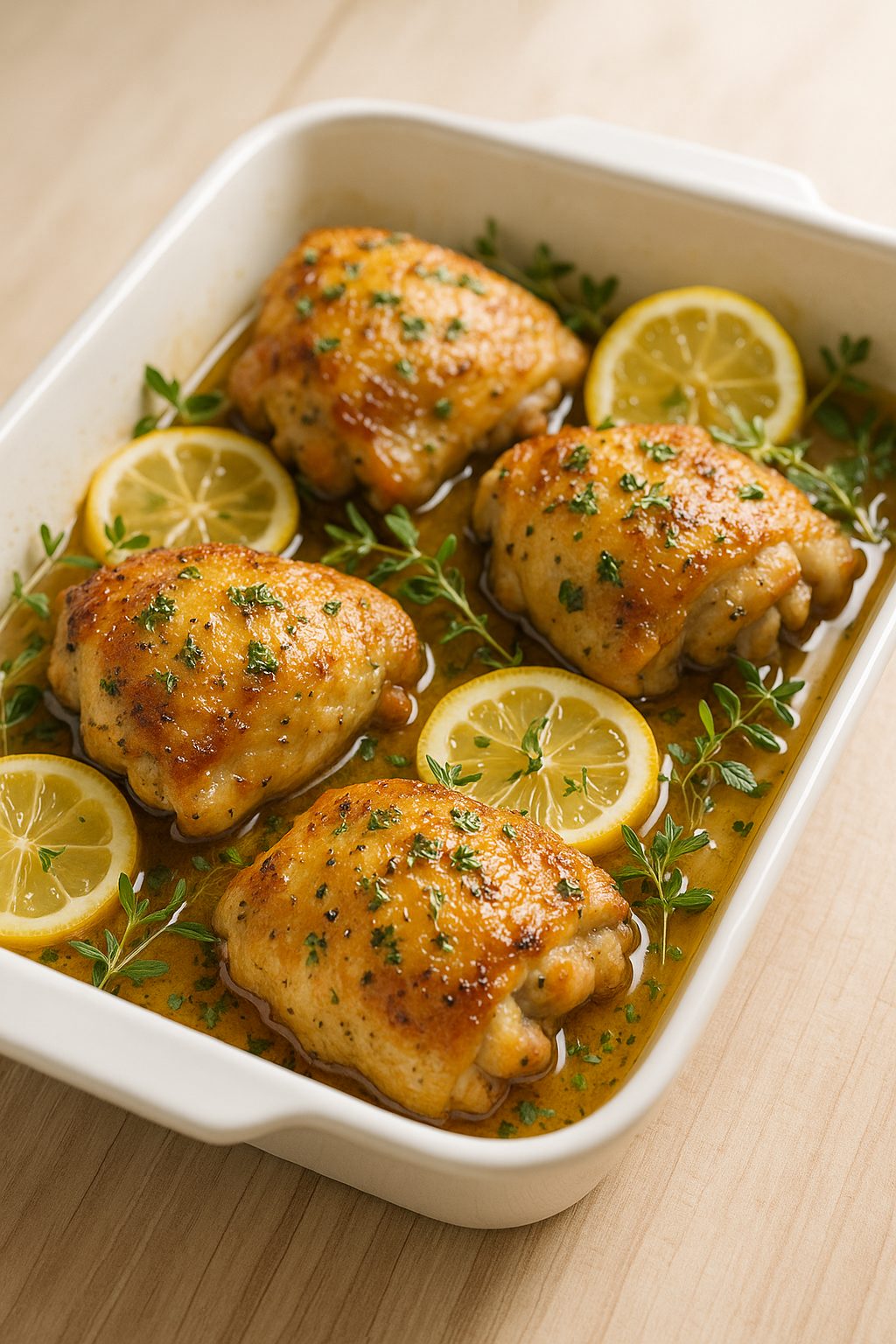
Baked Lemon Herb Chicken Thighs
Ingredients
Method
- Preheat the oven to 425°F (220°C).
- Pat the chicken thighs dry and place them in a large baking dish.
- In a bowl, whisk the olive oil, garlic, lemon juice, lemon zest, oregano, thyme, salt, and pepper.
- Pour the mixture over the chicken and rub it into the skin.
- Bake for 35-40 minutes, until the skin is golden and the internal temperature reaches 175°F.
- Sprinkle with parsley and serve with the pan juices.