Crispy Honey Garlic Salmon
Salmon is one of the fastest proteins there is and one of the most commonly ruined. Twenty-five minutes here, four ingredients in the glaze, and the difference between excellent and disappointing comes down to two decisions: when you stop cooking it, and when the honey goes in.
Stop Cooking It Sooner Than You Think
Overcooked salmon is the single most common mistake with this fish, and it is easy to spot afterwards — the flesh turns pale and opaque all the way through, it flakes into dry chalky pieces, and white curds of coagulated protein squeeze out of the surface. That white stuff is albumin, and it appearing in quantity is your fish telling you it went too far.
Salmon is at its best somewhere between 125°F and 130°F in the centre, where it is still slightly translucent and the flakes separate but stay moist. The FDA guidance of 145°F is a safety-margin number and produces fish most cooks would consider overdone.
Because the fillets go back into the pan for a final minute with the glaze, and because they carry over several degrees after leaving the heat, pull them at around 120–125°F. If you do not have a thermometer, press the top of a fillet gently: it should flake apart under light pressure but still look slightly darker and wetter in the very centre.
Seven minutes total in the pan sounds short. It is not.
Honey Burns — That Is Why It Goes In Last
Honey is mostly sugar, and sugar begins to caramelize and then scorch well below searing temperature. If you marinated the salmon in the honey mixture and then put it in a hot pan, you would have a blackened, bitter crust long before the fish was cooked.
So the salmon is seared plain, in oil, with nothing but salt and pepper on it. The glaze is built afterwards in the same pan over medium heat, where the honey can reduce and thicken without burning. Then the fish goes back in for sixty seconds to be coated.
This order also gives you a better sear. Sugar on the surface of the fish would interfere with browning the flesh itself, and it is that direct contact between dry fish and hot oil that produces the golden crust.
Ingredient Notes
- Salmon fillets (4, about 6 oz each). Try to get pieces of even thickness so they finish together. Centre-cut fillets are more uniform than tail pieces. Skin on or off both work; if the skin is on, sear that side longer for a crisp result.
- Honey (3 tbsp). The body of the glaze. Any honey works; a stronger one like buckwheat will dominate, so a mild clover honey is safer.
- Soy sauce (2 tbsp). All the salt in the glaze. It balances the honey and provides the savory depth that stops this tasting like dessert.
- Lemon juice (1 tbsp). The third leg. Sweet and salty alone is flat; the acid is what makes the glaze taste finished and cuts the richness of the fish.
- Garlic (3 cloves, minced). Into warm butter for thirty seconds, not into the hot sear.
- Butter (1 tbsp). Adds gloss and body to the glaze and helps it cling.
Method
Pat the fillets very dry and season with salt and pepper. Dry fish sears; wet fish steams. This is the same principle as with steak and it matters just as much here.
Sear skin-side up for 4 minutes over medium-high heat until deeply golden. Do not move the fish while it is searing — salmon releases from the pan on its own once a crust has formed, and prodding it early is how fillets tear apart. If it sticks when you try to lift it, give it another thirty seconds.
Flip and cook 3 minutes more, then move to a plate. It should be just under done.
Lower the heat to medium, add the butter and garlic, 30 seconds.
Stir in the honey, soy sauce, and lemon juice and simmer 1–2 minutes until it thickens slightly and coats the back of a spoon. It thickens further off the heat, so stop while it still looks a little loose.
Return the salmon, spoon the glaze over it, and cook one more minute until sticky and glossy. Serve straight away.
What Goes Wrong
- Dry, chalky fish. Overcooked. Pull it at 125°F and trust the carryover.
- Fillet stuck to the pan and tore. Moved too early, or the pan was not hot enough. Wait for it to release on its own.
- Glaze burnt and bitter. Heat too high once the honey went in. Medium, and keep it moving.
- Glaze too thin. Simmer another minute before the fish goes back.
- Glaze seized into a hard candy. Reduced too far. Loosen it with a splash of water off the heat.
- White curds all over the surface. Cooked too fast or too long. Slightly lower heat and less time.
Variations
- Spicy. A teaspoon of sriracha or a pinch of red pepper flakes in the glaze. Honey and chili is a very good combination with salmon.
- Ginger. A teaspoon of grated fresh ginger with the garlic.
- Sesame. A few drops of toasted sesame oil stirred in off the heat, plus sesame seeds to finish.
- Baked instead. 400°F for 12–15 minutes, with the glaze made separately on the stove and brushed on for the last three minutes. Easier for a crowd, less crisp.
- Air fryer. 400°F for 8–10 minutes, glaze brushed on at the end.
- Other fish. The glaze works well on cod, halibut, or trout. Adjust the time for thickness.
- Crispy skin. Leave the skin on, start skin-side down, and give it 5 minutes before flipping. Press the fillet flat with a spatula for the first thirty seconds so it does not curl.
Serving and Storage
Steamed rice is the standard and the best vehicle for the extra glaze — make sure to scrape the pan out over the plates. Roasted broccoli, green beans, asparagus, or bok choy on the side. A cucumber salad with rice vinegar is a good fresh counterpoint to the sweetness.
Leftovers keep 3 days refrigerated. Reheating salmon is a losing battle because any heat continues cooking it, so the honest advice is to eat it cold. Flaked cold salmon is genuinely good in a salad, in a grain bowl, or mixed with a little mayonnaise for sandwiches. If you must reheat, do it gently — covered, in a 275°F oven for about 10 minutes.
Cooked salmon freezes for up to 2 months but the texture suffers noticeably. Freezing raw fillets and cooking them fresh is much better if you are planning ahead.
Frequently Asked Questions
How do I know when salmon is done?
125–130°F in the thickest part, or when it flakes under gentle pressure but the very centre still looks slightly translucent. It will finish cooking off the heat.
Should I cook it skin on or skin off?
Either. Skin on protects the fillet and can be made deliciously crisp; skin off is simpler and lets the glaze coat both sides.
Can I use frozen salmon?
Yes, thawed completely first and then patted very dry — thawed fish holds a lot of surface water and will not sear until it is gone.
Can I marinate the salmon in the glaze first?
No. The honey will burn during the sear. Build the glaze in the pan afterwards.
Is there a substitute for honey?
Maple syrup works and gives a slightly different, warmer flavour. Brown sugar dissolved in a tablespoon of water also works.
How do I make it gluten-free?
Use tamari or certified gluten-free soy sauce. Nothing else needs to change.
Can I cook all four fillets at once?
Only if your pan is genuinely large enough for them not to touch. Crowded fillets steam and will not brown — two batches is better.
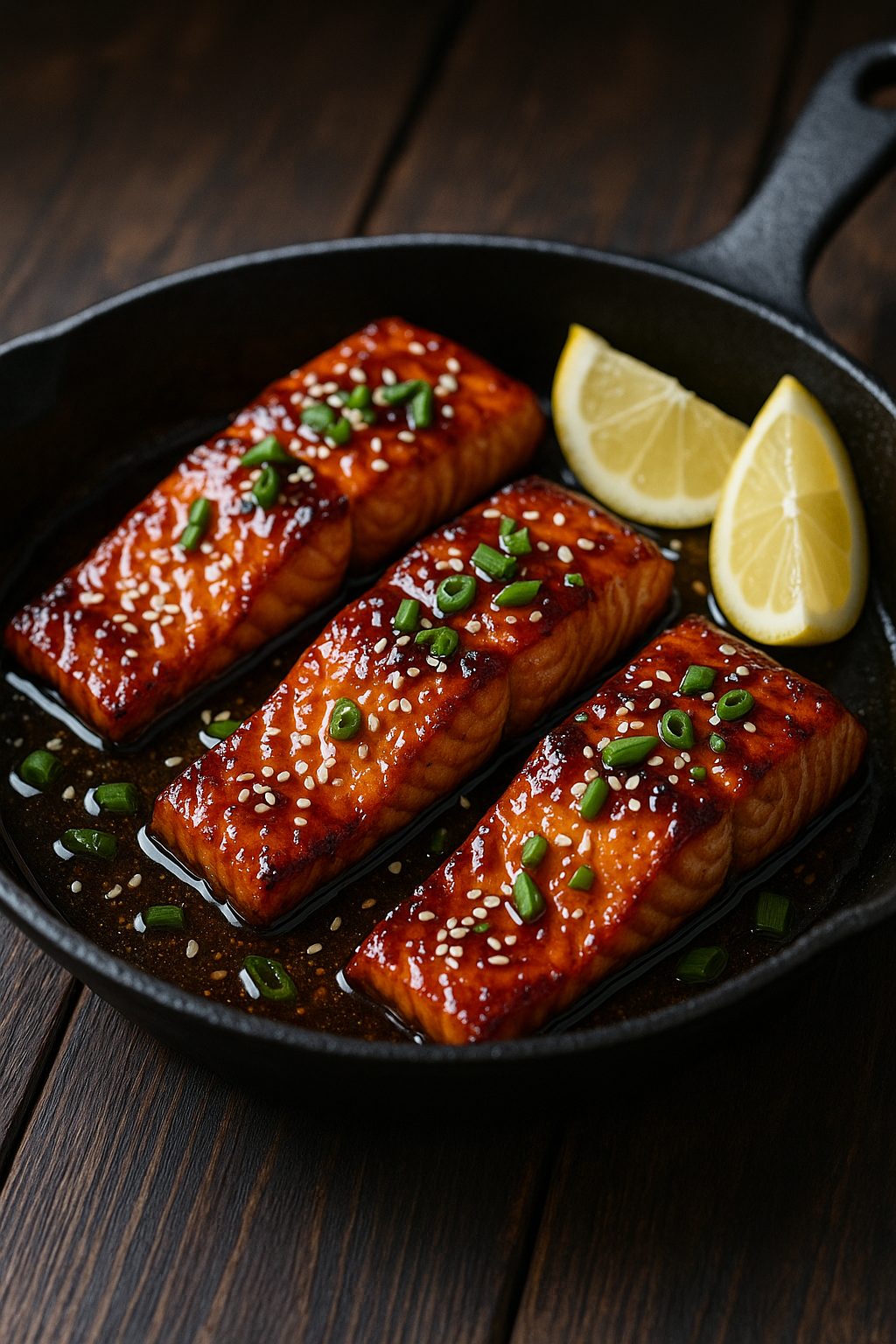
Crispy Honey Garlic Salmon
Ingredients
Method
- Pat the salmon fillets dry and season with salt and pepper.
- Heat the olive oil in a large skillet over medium-high heat. Add the salmon skin-side up and sear for 4 minutes, until golden. Flip and cook 3 more minutes, then transfer to a plate.
- Lower the heat to medium. Add the butter and garlic and cook for 30 seconds.
- Stir in the honey, soy sauce, and lemon juice, and simmer for 1-2 minutes until slightly thickened.
- Return the salmon to the skillet, spoon the glaze over the top, and cook for another minute until sticky and glossy. Serve immediately.