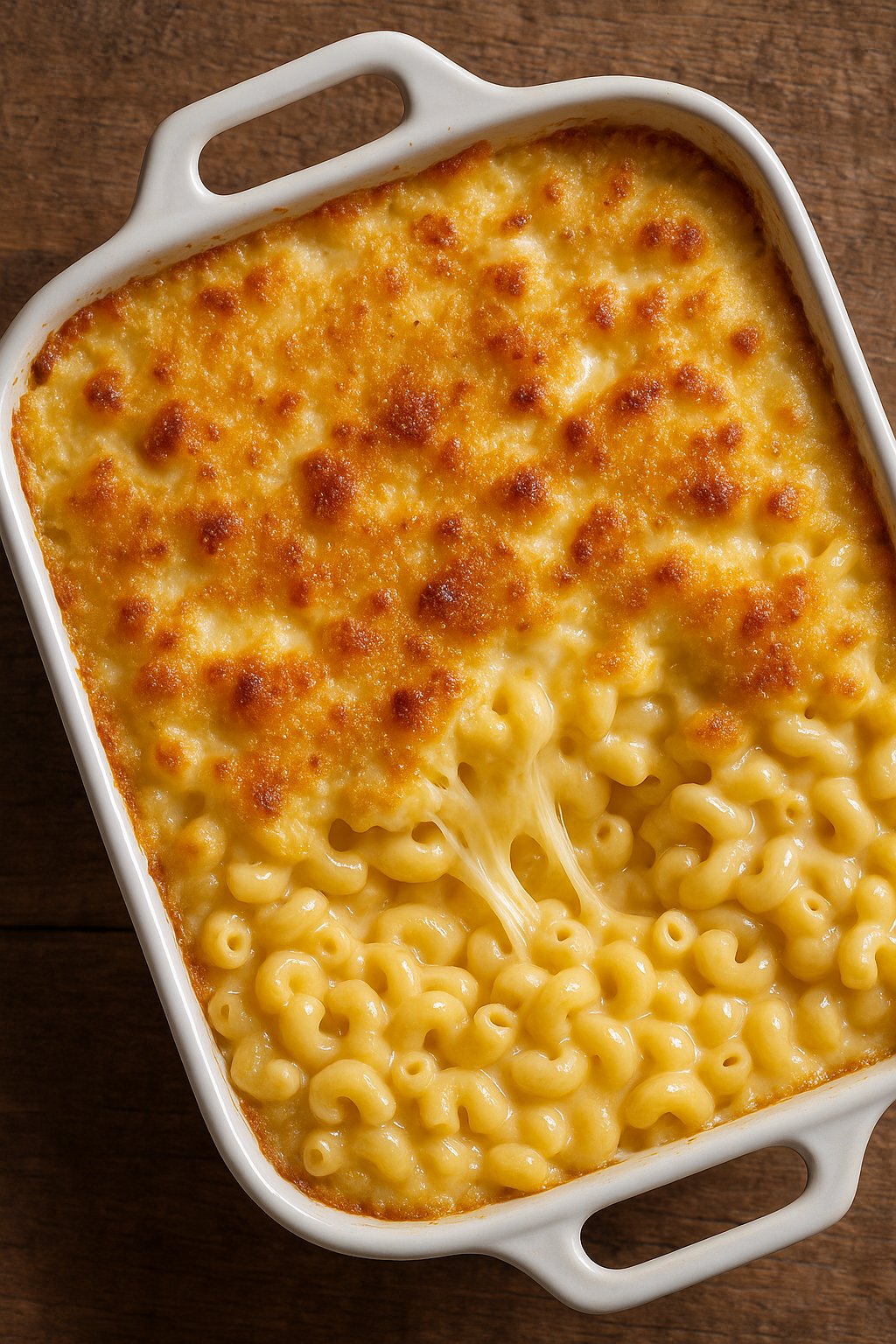
Creamy Baked Mac and Cheese
The complaint about homemade baked mac and cheese is almost always the same: it was creamy in the pot and dry in the dish. You make a beautiful sauce, you bake it, and twenty-five minutes later it has turned into pasta held together by something grainy.
There are three reasons that happens, and all three are fixable before the dish goes in the oven.
Undercook the Pasta by Two Full Minutes
The macaroni is going to spend another twenty-five minutes in a hot oven surrounded by liquid, and it will keep absorbing that liquid the entire time.
Cook it to a normal al dente first and it arrives at the table bloated and soft, having drunk the sauce that should be coating it. Two minutes short of the package time — still genuinely firm in the centre, the kind of bite you would send back at a restaurant — is what leaves it perfect after baking.
Do not rinse it. The surface starch helps the sauce cling.
Make the Sauce Too Loose on Purpose
When you fold the pasta into the sauce it should look wrong — loose, soupy, more sauce than seems sensible. That is correct, and it is the second reason baked mac dries out.
Four cups of milk for a pound of pasta is a lot. The pasta absorbs a substantial portion during baking, and the béchamel thickens further as it heats. A sauce that looks perfectly thick in the pot will be stiff and dry after twenty-five minutes in the oven.
Trust it. Soupy in the pot means creamy on the plate.
Shred Your Own Cheese
The third reason, and the one that causes graininess specifically.
Pre-shredded cheese is coated with cellulose, potato starch, or powdered cellulose to stop the strands clumping together in the bag. That coating does not dissolve into a sauce. It stays suspended, giving a slightly sandy texture, and it interferes with the cheese melting smoothly — instead of emulsifying, the cheese proteins tighten and squeeze out their fat.
Shredding 18 oz of cheese by hand takes about four minutes and it is the single biggest quality difference in this recipe.
The other half of that is temperature. Take the pot off the heat before the cheese goes in, and add it a handful at a time, letting each melt before the next. Cheese added to a simmering sauce will break.
Ingredient Notes
- Sharp cheddar (12 oz) and Gruyère (6 oz). Cheddar for the familiar flavour, Gruyère for meltability — it is a superb melting cheese and gives the sauce a smooth, slightly nutty depth cheddar alone cannot. If Gruyère is not available, use fontina, young gouda, or Monterey Jack. Avoid pre-packaged “melting blends.”
- Whole milk (4 cups, warmed). Warm the milk before it goes into the roux. Cold milk hitting hot roux causes lumps that you then have to whisk out; warm milk incorporates smoothly. Thirty seconds in the microwave is enough.
- Butter and flour (4 tbsp and 1/3 cup). The roux. Cook it 1–2 minutes until it smells nutty but has taken on no colour — that cooks out the raw flour taste without darkening the sauce.
- Dry mustard powder (1 tsp). This is the secret ingredient in most good mac and cheese recipes. It does not make the dish taste of mustard; it sharpens and amplifies the cheese flavour. Leaving it out gives a noticeably flatter result.
- Nutmeg (1/4 tsp). Traditional in béchamel. Again, you should not be able to identify it — it just adds warmth.
- Panko (1 cup) with melted butter. Panko rather than fine breadcrumbs, because it stays crunchy. Tossing it with butter first is what makes it brown properly rather than just drying out.
Method
Cook the macaroni 2 minutes short of al dente. Drain, do not rinse.
Make the roux: melt 4 tablespoons of butter, whisk in the flour, cook 1–2 minutes until nutty-smelling and still pale.
Add the warm milk in a slow stream, whisking constantly. Slowly at first — the roux needs to absorb the liquid gradually. Simmer 4–5 minutes until it thickly coats the back of a spoon.
Off the heat, add the seasonings, then the cheese a handful at a time, stirring until each addition melts smooth. Reserve a third of each cheese for the top.
Fold in the pasta. It will look loose. Good.
Spread into the buttered dish, top with the reserved cheeses, then scatter over the buttered panko.
Bake 20–25 minutes at 375°F until the edges bubble and the topping is deep golden.
Rest 10 minutes before serving. The sauce is molten straight from the oven and needs this time to set into something that holds on a spoon.
Troubleshooting
- Dry after baking. Sauce was too thick, or the pasta was fully cooked before baking.
- Grainy or gritty. Pre-shredded cheese, or the cheese was added over heat.
- Greasy, with oil pooling. The sauce got too hot after the cheese went in and the emulsion broke.
- Lumpy sauce. Cold milk added too fast. Warm it and pour slowly.
- Bland. Under-salted, or the mustard powder was skipped. Cheese sauces need more salt than expected.
- Topping soggy. Panko not tossed in butter, or the dish was covered while baking.
Variations
- Bacon. Half a pound, crisped and crumbled, folded in or scattered on top.
- Lobster or crab. Folded in with the pasta. Reduce the cheddar slightly so it does not overwhelm.
- Buffalo chicken. Shredded chicken tossed in hot sauce, plus blue cheese crumbles.
- Smoky. Swap some cheddar for smoked gouda, and add 1/2 teaspoon smoked paprika.
- Truffle. A drizzle of truffle oil stirred into the sauce off the heat.
- Vegetables. Steamed broccoli or roasted cauliflower folded in with the pasta.
- Stovetop only. Skip the baking entirely — make the sauce slightly thicker and serve straight from the pot. Creamier, no crunchy top.
Make Ahead, Storage and Freezing
You can assemble the whole dish, without the panko topping, and refrigerate it for up to 2 days. Add the topping just before baking and add 10–15 minutes since it goes in cold. Adding the breadcrumbs early makes them soggy.
Baked leftovers keep 4 days refrigerated. Reheat covered at 350°F for about 20 minutes with a splash of milk stirred through first — baked mac sets very firm when cold and needs the extra liquid to come back. Individual portions microwave well with a tablespoon of milk added.
It freezes for up to 3 months, assembled and unbaked without the topping, or baked and cut into portions. Thaw overnight before baking. The texture is slightly less creamy after freezing but it is still very good.
What to Serve With It
As a main, something green and sharp — a salad with vinaigrette, roasted broccoli, or green beans. As a side it belongs with barbecue, fried chicken, ham, or pulled pork, which is where it does its best work. A little hot sauce at the table is not a bad idea.
Frequently Asked Questions
Why is my mac and cheese grainy?
Pre-shredded cheese, or the cheese was added while the sauce was still on the heat. Shred your own and add it off the burner.
Why did it come out dry?
The sauce needs to look too loose before baking, and the pasta needs to be undercooked by two minutes. Both are counterintuitive and both matter.
What cheeses work best?
Sharp cheddar plus a good melting cheese like Gruyère, fontina, or gouda. Avoid anything very hard or very aged on its own — they melt poorly.
Can I make it ahead?
Assemble up to 2 days ahead without the breadcrumb topping. Add the topping and bake, allowing extra time from cold.
Do I have to bake it?
No. Stop after folding in the pasta and serve it from the pot — make the sauce a little thicker if you do.
What does the mustard powder do?
It amplifies the cheese flavour without tasting of mustard. It is a standard addition in good mac and cheese and worth keeping in the cupboard.
Can I halve the recipe?
Yes, into an 8×8 dish, baking about 20 minutes.
Creamy Baked Mac and Cheese
Ingredients
Method
- Heat the oven to 375°F and butter a 9x13-inch baking dish. Bring a large pot of salted water to a boil.
- Cook the macaroni 2 minutes short of the package's al dente time — it should still be firm in the center. Drain and set aside. Do not rinse.
- Melt 4 tablespoons of the butter in the same pot over medium heat. Whisk in the flour and cook for 1 to 2 minutes, until it smells nutty but has not taken on color.
- Pour in the warm milk in a slow stream, whisking constantly. Simmer for 4 to 5 minutes, whisking often, until the sauce thickly coats the back of a spoon.
- Take the pot off the heat. Stir in the salt, mustard powder, garlic powder, nutmeg, and pepper, then add 2 cups of the cheddar and 1 cup of the Gruyere a handful at a time, stirring until each addition melts smooth.
- Fold the drained pasta into the sauce. It will look loose and almost soupy — that is what keeps it creamy after baking.
- Spread the mixture into the baking dish and scatter the remaining cheddar and Gruyere over the top.
- Melt the remaining 2 tablespoons of butter and toss it with the panko, then sprinkle the crumbs evenly over the cheese.
- Bake for 20 to 25 minutes, until the edges bubble and the topping is deep golden. Rest for 10 minutes before serving so the sauce sets.