Creamy Cajun Chicken Pasta
This is a thirty-minute dinner that tastes like it should take longer — blackened cajun chicken, sweet peppers, and a parmesan cream sauce clinging to penne. It is the sort of thing that shows up on chain restaurant menus, and the homemade version is genuinely better because you control how much heat goes in.
That last part matters more than you would think, and it is where most people go wrong on the first attempt.
Taste Your Cajun Seasoning First
Cajun seasoning is not a standardized product. Some brands are mostly paprika, garlic, and herbs with a gentle warmth. Others are aggressively hot and, more importantly, extremely salty — salt is frequently the first ingredient on the label.
The recipe calls for two tablespoons across four servings, which is a lot of any spice blend. With a mild, low-salt brand that is exactly right. With a salt-forward one, it will make the dish close to inedible.
So before anything else: put a pinch on your tongue. If it tastes primarily of salt, use half the amount and add more at the end once you have tasted the finished sauce. If it tastes of paprika and herbs, use the full amount confidently. This ten-second step is the difference between this recipe working for you and not.
For the same reason, do not add salt anywhere else until the very end. Between the seasoning, the broth, and the parmesan, there are three salty ingredients already in play.
Save Some Pasta Water
Before you drain the penne, scoop out a cup of the cooking water. You may not need it, but when you do need it there is no substitute.
That cloudy water is full of starch released by the pasta, and starch is an emulsifier — it helps fat and liquid bind into a smooth, glossy sauce instead of separating. If your cream sauce ends up too thick, or looks like it is splitting, a splash of hot pasta water fixes it in a way that plain water or more cream cannot. It loosens without diluting the flavour.
This is the single most useful habit in pasta cooking and it costs nothing but remembering.
Ingredient Notes
- Penne (12 oz). Ridged penne holds cream sauce better than smooth. Cook it to al dente — it gets tossed in hot sauce at the end and will soften slightly more.
- Chicken breast (1 lb, sliced). Slice into strips about half an inch thick so they cook quickly and evenly. Thighs work and are more forgiving if you tend to overcook chicken.
- Heavy cream (1 cup). Heavy cream, not milk or half-and-half. It needs the fat content to simmer with parmesan and acidic seasonings without breaking.
- Chicken broth (1/2 cup). Thins the cream to a sauce consistency and adds savoriness.
- Parmesan (1/2 cup, grated). Grate it from a wedge. Pre-grated parmesan carries a starch coating that prevents smooth melting and leaves the sauce grainy.
- Red bell pepper (1, sliced). Sweetness against the heat, and colour. Cook it only briefly — two minutes — so it keeps some bite.
- Parsley. Fresh, at the end. A rich, spicy dish needs something green and raw on top.
Method
Cook the pasta first so it is ready when the sauce is. Reserve a cup of the water, then drain.
Toss the chicken with 1 tablespoon of the cajun seasoning until evenly coated.
Sear the chicken 5–6 minutes over medium-high heat. Get the oil hot first and spread the strips in a single layer. Leave them undisturbed for the first two minutes so the spice crust can form and darken — that dark, almost-blackened surface is where the flavour is. Cook in two batches rather than crowding the pan. Move to a plate.
Cook the bell pepper and garlic 2 minutes. Just enough to soften the pepper slightly and take the raw edge off the garlic.
Add the broth, cream, remaining seasoning, and parmesan and simmer 3–4 minutes. Scrape up the browned spice residue from the bottom of the pan as the liquid goes in — that is concentrated flavour. Keep it at a gentle simmer, never a hard boil, or the cream will split. It is ready when it coats the back of a spoon.
Return the chicken and pasta and toss to coat. If the sauce is tight, loosen it with the reserved pasta water a splash at a time.
Taste now, and only now, decide about salt. Finish with parsley.
Troubleshooting
- Far too salty. A salt-heavy cajun blend. There is no full fix once it happens, but adding more cream, more pasta, and a squeeze of lemon will pull it back somewhat. Taste the blend next time.
- Sauce split or grainy. Boiled too hard, or lower-fat dairy. Off the heat, whisk in a splash of cold cream or hot pasta water.
- Sauce too thin. Simmer a minute or two longer before the pasta goes in, or add another handful of parmesan.
- Sauce disappeared. Pasta absorbs it as it sits. Serve immediately and keep pasta water on hand.
- Chicken dry. Overcooked or sliced too thin. Strips this size need barely five minutes.
- Not enough heat. A mild blend. Add cayenne rather than more of the blend, so you are not adding more salt with it.
Variations
- Shrimp. Season and sear 1 lb of large shrimp for about 90 seconds a side. A classic pairing with cajun seasoning.
- Sausage. Sliced andouille, browned first, either instead of or alongside the chicken.
- More vegetables. Sliced mushrooms, onion, or a second colour of bell pepper. Cook them with the red pepper.
- Blackened, properly. Use a cast iron skillet and get it very hot before the chicken goes in. The crust is dramatically better. Open a window.
- Lighter. Replace half the cream with evaporated milk. Not as luxurious, but it resists splitting well.
- Make your own seasoning. 2 tsp paprika, 1 tsp each garlic powder, onion powder, and dried oregano, 1/2 tsp each cayenne, thyme, and black pepper, plus salt to taste. Making it yourself is how you control the salt precisely.
Storage and Reheating
Refrigerate for up to 3 days. Cream sauces and pasta both change overnight — the pasta absorbs the sauce and the whole thing sets firm. Reheat gently in a skillet over medium-low with a generous splash of cream, milk, or broth, stirring until it loosens back into a sauce. Add a little fresh parmesan at the end.
The microwave works for a single portion at 50% power in short bursts, though it tends to toughen the chicken.
Freezing is not recommended. Cream sauces separate when frozen and the pasta comes out mealy. If you want to get ahead, cook the chicken and slice the vegetables in advance; the sauce takes five minutes from there.
What to Serve With It
Garlic bread for the sauce, and a crisp green salad with a sharp vinaigrette to cut through the richness. Roasted broccoli or green beans work if you want a vegetable that is not swimming in cream. Something cold to drink is genuinely part of the plan if you went heavy on the cayenne.
Questions
How spicy is this?
Entirely dependent on your seasoning blend. Start with half, taste the sauce, and add more. You can always increase; you cannot take it out.
Can I use milk instead of cream?
It will likely break. If you want something lighter, use half cream and half broth, or evaporated milk, both of which hold together better than regular milk.
Can I make it without dairy?
Full-fat canned coconut milk works surprisingly well with cajun spices and is stable at a simmer. Use nutritional yeast in place of the parmesan.
What pasta shape is best?
Penne, rigatoni, or fettuccine. Anything with ridges or hollows that hold sauce.
Why did my sauce go grainy?
Pre-grated parmesan or too much heat. Grate fresh and keep the pan at a gentle simmer.
Can I double this?
Yes. Sear the chicken in three batches rather than one, and use a genuinely large pan so there is room to toss the pasta at the end.
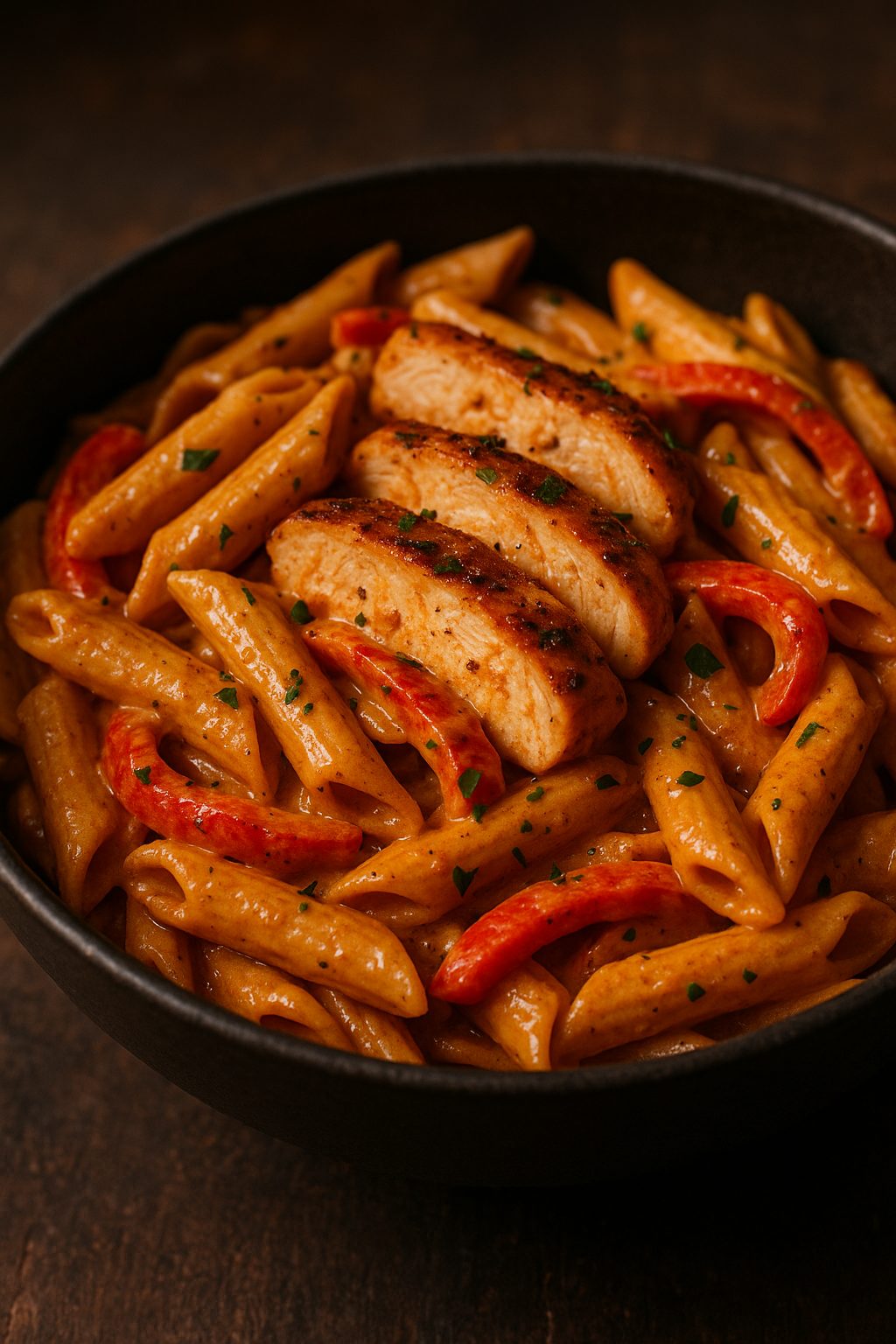
Creamy Cajun Chicken Pasta
Ingredients
Method
- Cook the pasta according to package directions, then drain and set aside.
- Toss the sliced chicken with 1 tablespoon of Cajun seasoning.
- Heat the olive oil in a large skillet over medium-high heat and cook the chicken for 5-6 minutes until golden. Transfer to a plate.
- Add the bell pepper and garlic and cook for 2 minutes.
- Pour in the chicken broth, heavy cream, remaining Cajun seasoning, and parmesan. Simmer for 3-4 minutes until slightly thickened.
- Return the chicken and add the pasta, tossing to coat. Garnish with parsley and serve.