One-Pot Taco Pasta
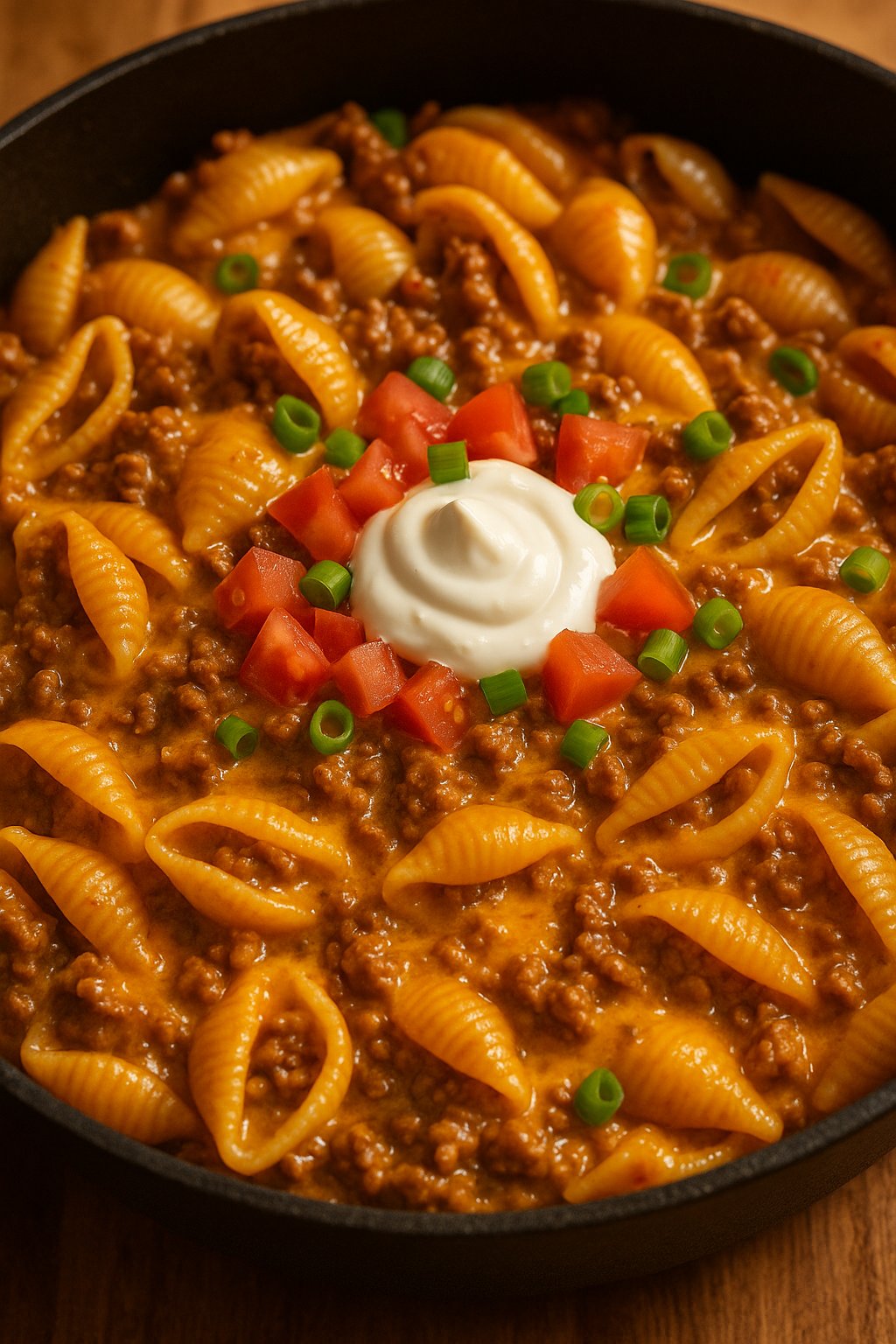
This is the dinner that gets made on the nights when nobody has the energy to plan one. Ground beef, taco spices, pasta, and a lot of cheddar, cooked in a single pot in thirty minutes. It is not sophisticated and it does not pretend to be.
What it does have are two steps that separate it from the version where everything just gets boiled together, and both take about a minute.
Bloom the Spices
After the beef is browned and before any liquid goes in, the chili powder, cumin, and paprika go into the hot pot for a full minute on their own.
This is called blooming, and it is standard practice in any cuisine that uses a lot of dried spice. The compounds that carry most of a spice’s aroma are fat-soluble, not water-soluble. Dumped into broth, they only partially release and the dish tastes vaguely dusty. Toasted briefly in the hot fat left from the beef, they dissolve into that fat and spread through the entire dish.
The difference is not subtle. Two tablespoons of chili powder bloomed properly tastes like considerably more than the same amount stirred into liquid.
Watch the clock, though — sixty seconds, stirring constantly. Ground spices burn quickly, and burnt chili powder is acrid in a way you cannot cook out.
Take the Pot Off the Heat Before the Cheese
The second step. Cheese added to a simmering pot will not melt smoothly; the proteins tighten and squeeze out their fat, and you get stringy clumps floating in a greasy liquid instead of a creamy sauce.
So the pot comes off the burner completely, and the cheddar goes in a handful at a time, each one stirred until it disappears before the next goes in. The residual heat is more than enough to melt it, and the gentler temperature keeps the emulsion intact.
Freshly shredded cheese matters here too. Bagged shredded cheddar is coated with cellulose or potato starch to keep it from clumping in the bag, and that coating actively prevents smooth melting. It is the most common reason a cheese sauce turns out grainy.
Ingredient Notes
- Ground beef (1 lb, 85% lean). Not leaner. You need some fat both for browning and for blooming the spices in. Drain the excess afterwards, but starting with 93% lean gives you a drier, blander result.
- Medium shells (12 oz). Shells are ideal because they trap the sauce inside. Rotini works for the same reason. Avoid long shapes, which do not suit this at all.
- Beef broth (3 cups). The pasta cooks in this, so the pasta ends up tasting of it. Use a decent one.
- Diced tomatoes (14.5 oz, undrained). The juice is part of the liquid measurement, so do not drain it.
- Chili powder (2 tbsp) and cumin (2 tsp). American chili powder, which is a blend, not pure ground chili. If yours is a single-chili powder, use considerably less and add more cumin and paprika.
- Sharp cheddar (2 cups, freshly shredded). Sharp, because a pot this size mutes flavour. Mild cheddar effectively disappears.
Method
Brown the beef with the onion over medium-high heat, breaking it up, about 7 minutes. Let it actually brown rather than just turn grey — leave it undisturbed for a minute at a time so it develops colour. Drain off the excess fat but leave a little behind.
Add the garlic and spices and cook 1 minute, stirring constantly, until fragrant.
Add the tomatoes with their juice and the broth, and bring to a boil, scraping the bottom of the pot to lift the browned bits.
Stir in the dry pasta, cover, and simmer 12–15 minutes, stirring every few minutes. The stirring is not optional — pasta cooking in a small amount of starchy liquid welds itself to the bottom of a pot if left alone. Scrape across the base each time.
Take the pot off the heat entirely, then add the cheddar a handful at a time, stirring until smooth.
Let it stand 5 minutes. It will look slightly loose when the cheese goes in and thickens noticeably as it rests. Skipping this makes it seem soupy.
Top with green onions and serve.
Troubleshooting
- Pasta stuck and scorched. Not stirred often enough, or the simmer was too aggressive. Keep it at a gentle bubble.
- Cheese went stringy or greasy. Added over heat, or pre-shredded cheese. Off the heat, freshly grated, a handful at a time.
- Too soupy. Give it the five minutes to sit. If it is still loose, simmer uncovered for a couple of minutes before the cheese goes in.
- Too thick or dry. Pasta absorbs liquid as it stands. Loosen with a splash of broth.
- Spices taste dusty. They were not bloomed.
- Bitter. The spices burnt. Sixty seconds, no more.
Variations
- Ground turkey or chicken. Works fine, but add a tablespoon of oil since there is much less fat to bloom the spices in.
- Add beans. A drained can of black beans or pinto beans stirred in with the pasta.
- Corn. A cup of frozen corn added in the last five minutes.
- Spicy. A diced jalapeño with the onion, or a can of diced green chiles, or cayenne to taste.
- Creamier. Stir 4 oz of cream cheese in with the cheddar for something closer to a queso sauce.
- Vegetarian. Skip the beef, use vegetable broth, and add two cans of beans plus a diced bell pepper.
- Toppings. Sour cream, diced avocado, pickled jalapeños, crushed tortilla chips, lime wedges, cilantro. The chips are a genuinely good addition for texture.
Storage and Reheating
Refrigerate for up to 4 days. Like all one-pot pastas it thickens considerably overnight as the shells keep absorbing the sauce, so expect to loosen it when reheating — a splash of broth or milk, over medium-low heat on the stove, stirring until it comes back together. The microwave works for single portions; add a spoonful of liquid first.
It freezes reasonably for up to 2 months, with the caveat that the pasta softens and the cheese sauce can look slightly separated on thawing. Stirring vigorously while reheating brings it mostly back. If you know you are freezing it, undercook the pasta by two minutes.
For meal prep, portion it into containers while hot and cool before sealing. It holds up better than most pasta dishes because the sauce is substantial rather than delicate.
What to Serve With It
It is a full meal in a bowl, so it needs very little. A green salad with lime vinaigrette is the natural partner and cuts through the richness. Tortilla chips on the side for scooping. Corn on the cob in summer. Nothing complicated — this is a Tuesday dinner and it should stay one.
Questions
Can I use a different pasta shape?
Shells, rotini, elbows, or penne all work. Stick to short shapes and expect small adjustments to the liquid — smaller shapes need slightly less.
Why did my cheese sauce go grainy?
Almost certainly pre-shredded cheese, or the pot was still on the heat. Both are easy to fix next time.
Can I make this in advance for a party?
It is best fresh, since the pasta keeps absorbing sauce. You can brown the beef and bloom the spices ahead, then finish it in fifteen minutes.
Is it very spicy?
No. American chili powder is mild. Add cayenne or jalapeño if you want actual heat.
Can I use taco seasoning packets instead?
Yes — two packets replaces the spices. They contain salt, so leave out the added teaspoon and taste at the end.
How do I stop the pasta sticking?
Stir every two or three minutes, scraping the bottom, and keep the heat at a gentle simmer rather than a boil.
One-Pot Taco Pasta
Ingredients
Method
- Brown the ground beef with the diced onion in a large pot or deep skillet over medium-high heat, breaking it up, about 7 minutes. Drain off excess fat.
- Add the garlic, chili powder, cumin, smoked paprika, and salt. Cook for 1 minute until fragrant — this blooms the spices and deepens their flavor.
- Pour in the diced tomatoes with their juice and the beef broth. Bring to a boil, scraping up any browned bits from the bottom.
- Stir in the dry pasta. Reduce to a simmer, cover, and cook 12 to 15 minutes, stirring every few minutes, until the pasta is tender and most of the liquid has been absorbed.
- Remove the pot from the heat completely. Add the shredded cheddar a handful at a time, stirring until melted and smooth.
- Let it sit for 5 minutes to thicken, then top with sliced green onions and serve.