Soft and Chewy Snickerdoodle Cookies
A snickerdoodle is a sugar cookie with two things added: a cinnamon-sugar coating and a distinctive tang. The coating is obvious. The tang is the part that people cannot quite name, and it comes from an ingredient that most other cookie recipes never use.
Leave it out and you have made a cinnamon sugar cookie. Pleasant, but not a snickerdoodle.
Cream of Tartar Is the Whole Point
The recipe says do not substitute, and it means it.
Cream of tartar is potassium bitartrate, an acidic powder that is a byproduct of winemaking. It does three specific things here, and no other single ingredient does all three.
Flavour. It contributes the faint, distinctive sourness that defines a snickerdoodle. It is subtle — you would not identify it as sour — but its absence is immediately noticeable to anyone who knows the cookie.
Leavening. Baking soda needs an acid to react with. In most cookie recipes that acid comes from brown sugar or molasses; this recipe uses only white sugar, so cream of tartar is what activates the soda and gives the cookies their lift.
Texture. Acid interferes with sugar crystallization, which keeps the cookies soft and chewy rather than crisp. It also inhibits gluten development slightly, contributing to the tender crumb.
Substituting baking powder is the common suggestion online. Baking powder is essentially baking soda plus a different acid, so it handles the leavening but delivers none of the flavour. The cookie will work; it will not taste right.
Chill the Dough, Then Bake Hot
Thirty minutes in the fridge, then a 375°F oven, which is hotter than most cookie recipes.
The chill firms the butter so the dough balls hold their shape and spread more slowly. Without it, this dough — a full cup of butter creamed with sugar — spreads into thin, flat discs. Chilled dough also rolls into neat balls without sticking to your hands, which matters when you are coating twenty-four of them in cinnamon sugar.
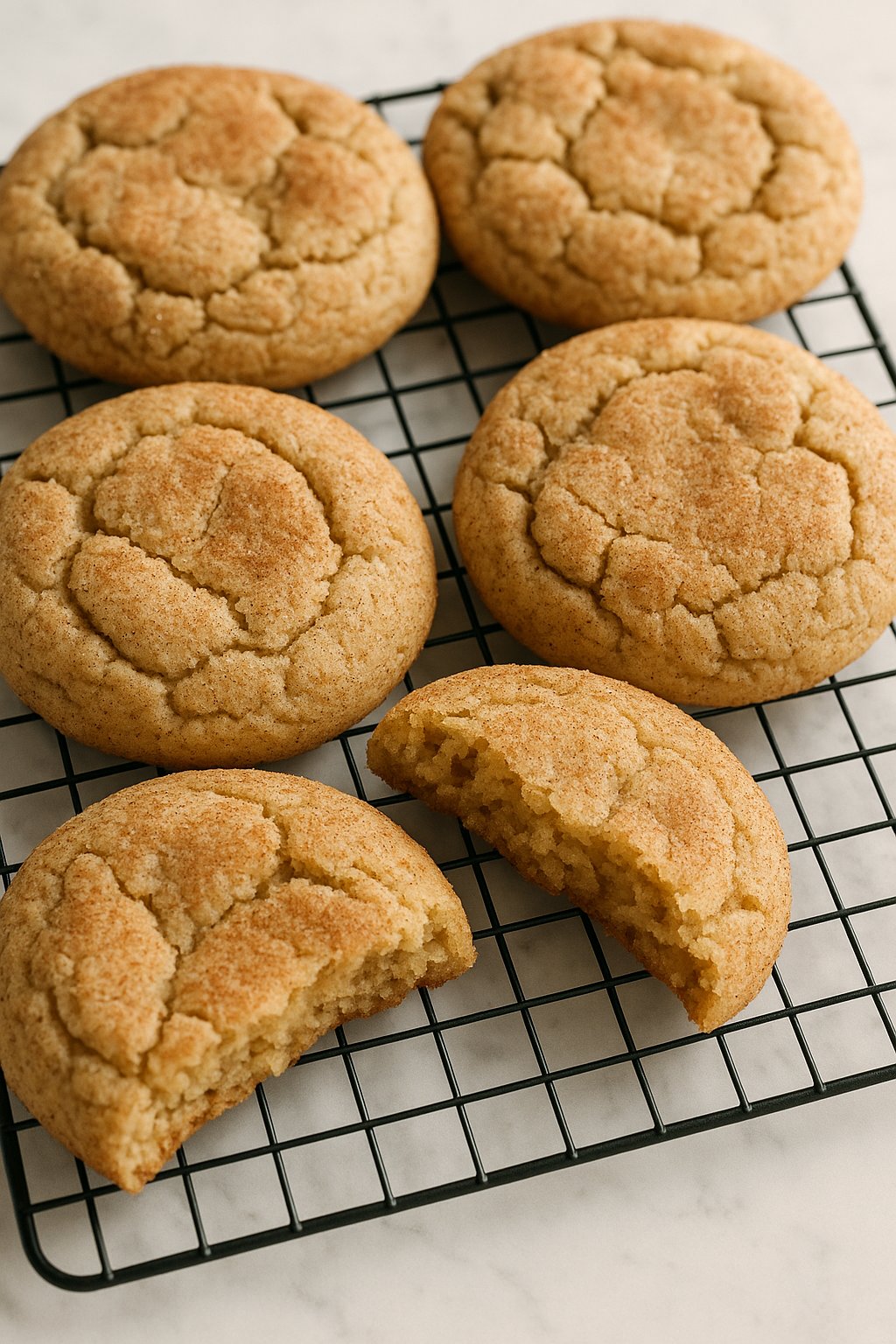
The hot oven sets the edges quickly while the centre is still rising, which produces the puffed, crackled top that snickerdoodles are supposed to have. A cooler oven bakes them evenly and flat.
Bake one sheet at a time in the centre of the oven. Two sheets at once means uneven heat and one tray of disappointing cookies.
Pull Them Underdone
Nine to ten minutes, and they should come out looking not quite finished — edges set, centres still puffy and pale.
Five minutes on the hot pan finishes them. This is carryover baking and it is doing real work: the residual heat of the sheet sets the middle without drying it out. Cookies left in the oven until the centres look done will be crisp and hard once cooled.
This takes nerve the first time. Trust it.
Ingredient Notes
- Butter (1 cup, softened). Softened means it gives when pressed but still holds its shape — around 65°F. Melted or greasy butter will not trap air during creaming and the cookies spread badly. Take it out of the fridge an hour ahead rather than microwaving it.
- Creaming for 3 minutes. Actually three minutes, timed. This beats air into the butter and is a genuine leavening step. The mixture should go from yellow to noticeably pale and increase in volume. Most people stop after thirty seconds.
- Flour (2 3/4 cups, spooned and leveled). Spoon it into the cup and level the top. Scooping compacts it and can add a quarter more than intended, giving dry, cakey cookies.
- Eggs at room temperature. Cold eggs can cause the creamed butter to seize into small lumps. Sit them in warm water for five minutes if you forgot.
- Cinnamon sugar (1/4 cup sugar to 2 tbsp cinnamon). That is a high proportion of cinnamon and it is correct — the coating should be visibly brown and taste strongly of cinnamon, not faintly. Coat the balls generously, rolling them twice if needed.
Method
Whisk the flour, cream of tartar, baking soda, and salt together and set aside.
Cream the butter and 1 1/2 cups sugar for 3 minutes until pale and fluffy.
Beat in the eggs one at a time, then the vanilla, scraping the bowl between additions.
Add the dry ingredients and mix on low just until no flour streaks remain. Stop there — over-mixing at this stage develops gluten and toughens the cookie.
Chill 30 minutes. Heat the oven to 375°F while you wait.
Roll into 1 1/2-inch balls and coat generously in the cinnamon sugar.
Bake 12 per sheet, one sheet at a time, 9–10 minutes, until the edges are set and the centres still look underdone.
Cool on the pan 5 minutes, then move to a rack.
Troubleshooting
- Flat and thin. Butter too warm, dough not chilled, or the tray was still hot from the previous batch. Always start with a cool sheet.
- Cakey rather than chewy. Too much flour, or over-mixed after adding it.
- Hard the next day. Overbaked. Pull them looking underdone.
- No tang. Cream of tartar substituted or omitted.
- Coating too faint. Not rolled generously enough. Roll twice.
- Uneven baking. Two sheets in the oven at once, or unevenly sized dough balls. Use a scoop.
Variations
- Brown butter. Brown the butter, then chill it back to a softened solid before creaming. More work, considerably deeper flavour.
- Chai spiced. Add cardamom, ginger, and a pinch of cloves to the cinnamon sugar.
- Pumpkin spice. Swap the cinnamon in the coating for pumpkin pie spice.
- Stuffed. Wrap the dough around a square of caramel or a chocolate truffle before rolling in the sugar.
- Larger cookies. 3-tablespoon balls, baked 12–13 minutes. Makes about 14.
- Snickerdoodle bars. Press the dough into a 9×13 pan, sprinkle the cinnamon sugar over, and bake 22–25 minutes.
Storage and Freezing
Store in an airtight container at room temperature for 5 days. A slice of sandwich bread in the container keeps them soft — the cookies draw moisture from the bread rather than drying out.
The dough freezes well, and this is the most useful way to use the recipe. Roll and coat the balls, freeze them solid on a tray, then bag them for up to 3 months. Bake straight from frozen at 375°F, adding 2–3 minutes. Two fresh snickerdoodles on demand with no mixing bowl is a good arrangement.
Baked cookies also freeze for 3 months. Thaw at room temperature, or ten seconds in the microwave restores the just-baked softness.
The dough also keeps refrigerated for 3 days if you want to spread the work over an evening and a morning.
Questions
Can I substitute baking powder for cream of tartar?
It will leaven the cookies but you lose the characteristic tang. Use 2 teaspoons of baking powder in place of the cream of tartar and soda combination if you must, and accept that they are cinnamon sugar cookies.
Do I have to chill the dough?
Yes for this one. Without it, a dough with this much butter spreads into flat discs.
Why did my cookies come out flat?
Butter too soft, dough not chilled, or a warm baking sheet. All three are common.
Can I make the dough ahead?
Yes — up to 3 days refrigerated or 3 months frozen as coated balls.
How do I keep them chewy?
Underbake slightly and store them airtight with a slice of bread.
Can I halve the recipe?
Yes, straightforwardly. Everything divides cleanly including the two eggs.
Where does the name come from?
Nobody is entirely sure. The most common explanation is that it comes from the German Schneckennudeln, meaning snail noodles, though it may simply be a nonsense word from 19th-century New England.
Soft and Chewy Snickerdoodle Cookies
Ingredients
Method
- Whisk the flour, cream of tartar, baking soda, and salt together in a bowl and set aside.
- Beat the softened butter and 1 1/2 cups sugar with a mixer on medium for 3 minutes, until pale and fluffy.
- Beat in the eggs one at a time, then the vanilla, scraping the bowl between additions.
- Add the dry ingredients and mix on low just until no streaks of flour remain. Do not overmix.
- Cover the bowl and refrigerate the dough for 30 minutes. Meanwhile, heat the oven to 375°F and line two baking sheets with parchment.
- Stir the 1/4 cup sugar and cinnamon together in a shallow bowl. Roll the chilled dough into 1 1/2-inch balls and coat each one generously in the cinnamon sugar.
- Arrange 12 balls per sheet, spaced 2 inches apart. Bake one sheet at a time for 9 to 10 minutes — the edges should be set and the centers should still look puffy and underdone.
- Let the cookies cool on the hot pan for 5 minutes to finish setting, then move them to a wire rack.